south iceland
Reynisfjara black-sand beach
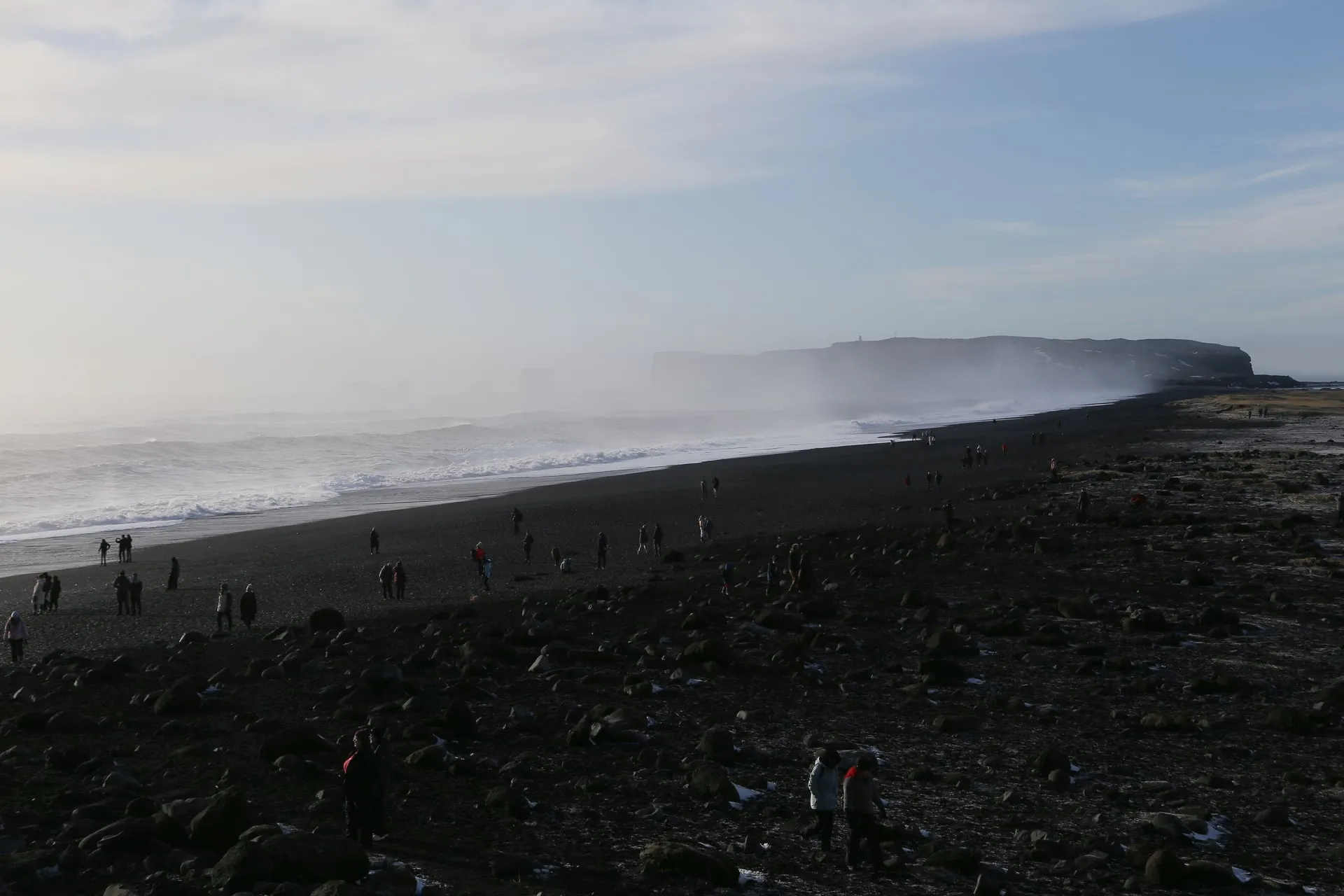
Reynisfjara is Iceland's most famous black-sand beach, with basalt columns and the Reynisdrangar sea stacks — and dangerous sneaker waves.
Key facts
- What it is
- Black-sand beach with basalt columns
- Region
- South Iceland
- Free?
- Yes
- Time needed
- 45–60 minutes
- Best months
- apr, may, jun, jul, aug, sep, oct
- Free?
- Yes
- Family friendly?
- Yes
- Good in rain?
- Yes
- Winter accessible?
- Yes
- 4×4 needed?
- No
- Price level
- free
- Safety note
- Sneaker waves are lethal here. Check the wave warning lights before walking on the sand.
What is Reynisfjara?
A black-sand beach 8 km west of Vík, on the open Atlantic coast of South Iceland. The beach is backed by Hálsanef — a cliff of hexagonal basalt columns formed by cooling lava — and looks out at the Reynisdrangar sea stacks, the eroded remnants of a former cliff.
Safety
Reynisfjara is genuinely dangerous. Multiple fatalities have occurred from sneaker waves over the past decade. Iceland’s authorities installed a colour-coded warning light system at the entrance:
- Green: Lower risk — keep well back from the surf anyway.
- Yellow: Moderate risk — stay near the cliffs.
- Red: Do not walk on the open sand.
Even at green, never turn your back to the ocean. Don’t kneel or sit. Don’t let children run ahead of you.
When to go
- Sunrise / sunset: Best light, fewest people.
- Avoid 10:00–15:00 in high season — coach tours from Reykjavík arrive in waves.
- Winter: Spectacular but extremely cold and wind-exposed.
Frequently asked questions
Why is Reynisfjara dangerous?
The surf at Reynisfjara comes in with no shallow transition — large waves can run up the beach far further than expected (sneaker waves). The temperature of the water means even a brief immersion can be fatal.
Is it safe to take photos at the basalt columns?
Yes, the columns sit well back from the surf zone. The danger is on the open sand, especially anywhere a wave can reach. Don't sit or kneel for photos on the wet sand.
When is Reynisfjara at its best?
At sunrise and sunset, with the basalt columns lit sideways and fewer crowds. In high summer it can be crowded all day; the shoulder months are quieter.