Thing to do in Iceland
Ice cave tours
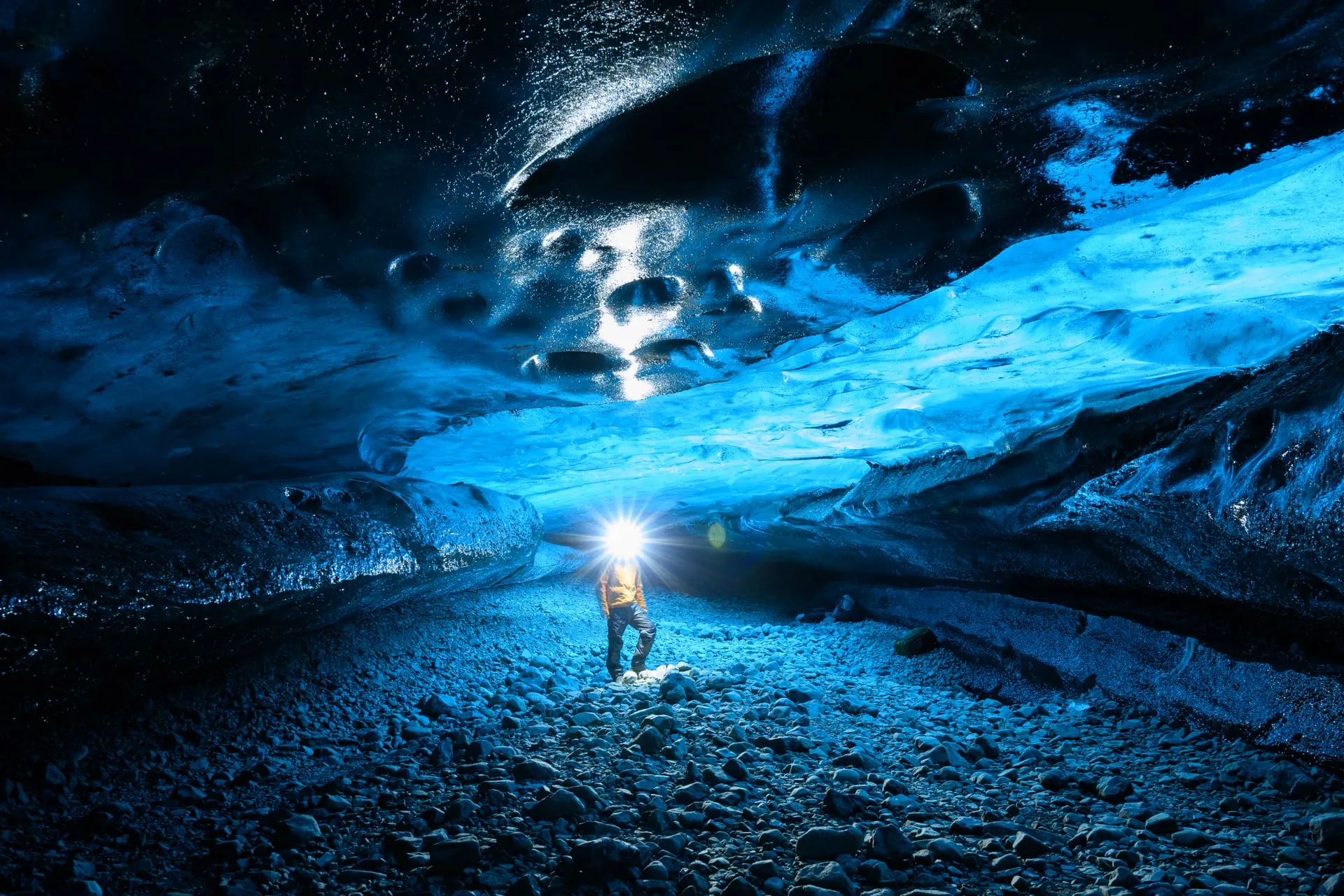
Ice cave tours in Iceland let you walk inside a glacier — natural blue ice caves run October to March; the Katla cave and Langjökull tunnel run longer.
Key facts
- Type
- Natural blue ice (winter), or the Katla ash cave / Langjökull tunnel (longer seasons)
- Duration
- 2.5–4 hours
- Guided only?
- Yes
- Time needed
- 2.5–4 hours
- Best months
- oct, nov, dec, jan, feb, mar
- Seasons
- winter, autumn
- Price level
- high
- Free?
- No
- Family friendly?
- Yes
- Good in rain?
- Yes
- Need a car?
- No
- 4×4 needed?
- No
- Guided only?
- Yes
- Difficulty
- easy
- Safety note
- Always go with a licensed operator. Independent access is dangerous and in many places illegal.
What are ice cave tours?
Ice cave tours take you inside a glacier — either through a natural cavity formed by meltwater (the “blue ice cave” you’ve seen photographed), the ash-banded natural Katla cave, or a man-made tunnel carved into the ice cap.
Natural blue ice caves
Form each autumn in outlet glaciers of Vatnajökull. Accessed via super-jeep from Jökulsárlón or Höfn. Available roughly October to March. The exact caves change year to year — operators scout new caves each autumn.
The longer-season alternatives
A permanent man-made tunnel runs in Langjökull (West Iceland). The Katla cave in Mýrdalsjökull (South) is a natural cave banded with dark volcanic ash — not a tunnel — reached by super-jeep from Vík and open on guided tours for much of the year, including summer when the Vatnajökull blue caves aren’t safe.
Booking and cost
- Book at least a few days ahead in winter.
- Expect to pay 20–40 000 ISK per person depending on tour length.
- Most tours include super-jeep transport and crampons.
Safety
Never enter glacier caves on your own. They look stable from outside but can collapse without warning. Licensed Icelandic operators monitor each cave continuously and close them when conditions change.
Frequently asked questions
When can you do a natural ice cave tour in Iceland?
Roughly October to March, depending on the cave and the year. Outside of that period the ice becomes unstable and tours don't run.
Are the year-round ice caves worth doing?
They're a good alternative if you visit outside winter. The man-made Langjökull tunnel and the natural, volcanic-ash-banded Katla cave are not the same blue cathedral as a winter Vatnajökull cave, but they're impressive and accessible.
Do you need to be fit?
No. Most natural-cave tours involve a short walk on the glacier (15–45 minutes) with crampons. Tours suitable for older travellers and children are available.
What should you wear for an ice cave tour?
Waterproof shell (top and bottom), warm layers, hat, gloves, and sturdy hiking boots. Crampons and helmet are provided. Avoid jeans — they'll get wet.