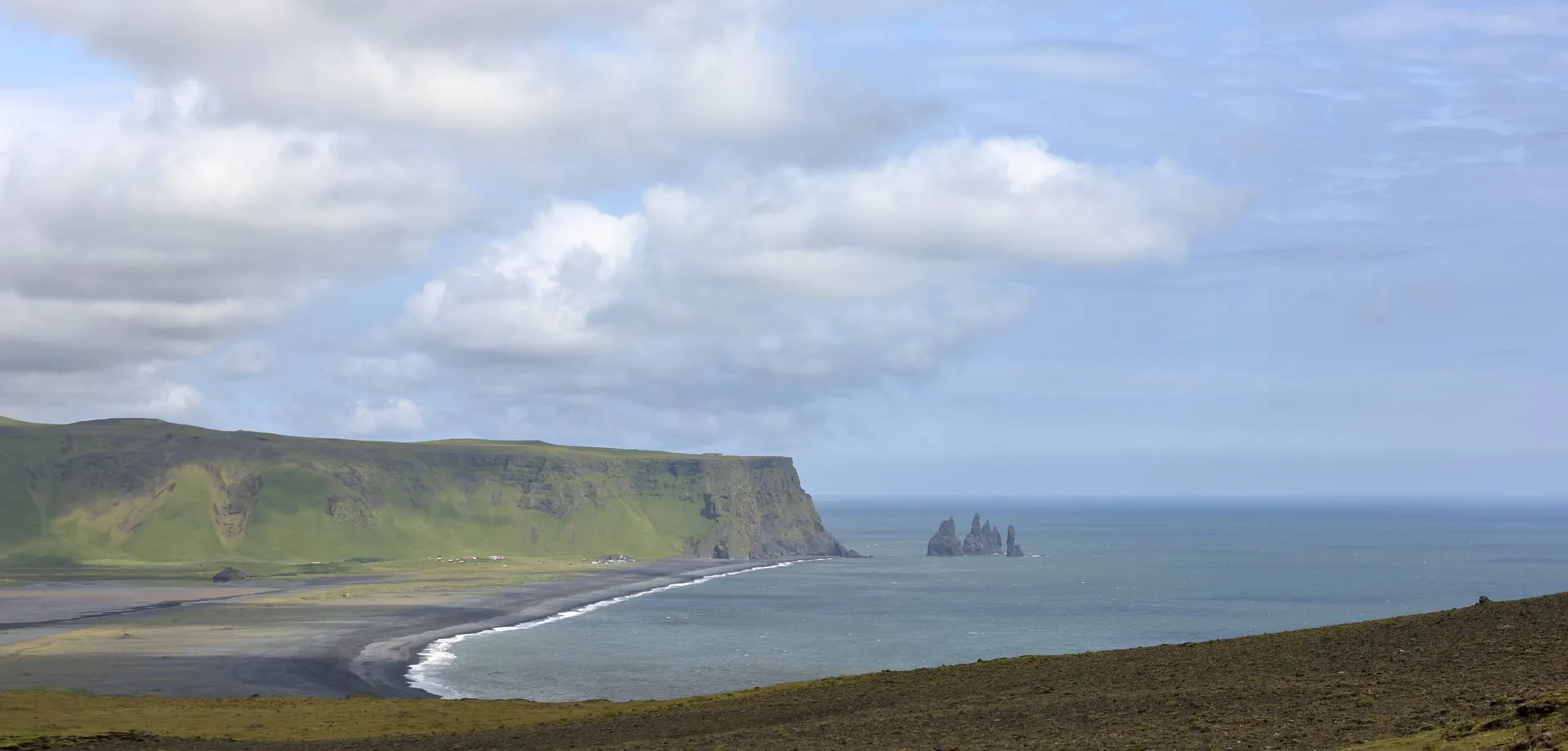
A curated list of the most photogenic stops on Iceland's main travel routes, with notes on light direction, best time of day and access logistics.
photography outdoor Good in rain
Key facts
Best season for moody light
Oct–Apr
Best for midnight sun
May–Jul
Most reliable region
South Coast + Southeast
Time needed
Varies
Best months
feb, mar, apr, may, jun, jul, aug, sep, oct, nov
Seasons
all-year
Price level
free
Free?
Yes
Family friendly?
Yes
Good in rain?
Yes
Need a car?
Yes
Difficulty
easy
The classics
Seljalandsfoss + Gljúfrabúi — backlit from the west in the afternoon.
Skógafoss — rainbow at the base in afternoon sun.
Reynisfjara basalt columns — sunrise / blue hour, low tide.
Vík church viewpoint — sunset over the Reynisdrangar stacks.
Jökulsárlón — anytime; mirror calm in the early morning.
Diamond Beach — sunrise, low tide for clearest bergs.
Stokksnes / Vestrahorn — golden hour reflections on wet sand at low tide.
Tips
Don’t try to do all of these in one day on a Reykjavík day trip; you’ll burn out.
A circular polariser helps on waterfalls and reflective sand.
The wind is almost always the limiting factor — a sturdy tripod matters more than a fast
lens.
Frequently asked questions
Where can you photograph the northern lights with a foreground?+
Stokksnes (Vestrahorn), Jökulsárlón, Diamond Beach and any of the South Coast waterfalls. Anywhere away from town lights with an interesting silhouette will work.
When is the best light on the South Coast?+
The two hours after sunrise and the two before sunset, year-round. In winter the entire day is essentially golden hour.