Guide
Things to do in Reykjavík
A local list of the best things to do in Reykjavík — sights, pools, food, museums and one-day plans — built for travellers who only have a city day or two.
Key facts
- Walkable radius
- ~3 km, covers everything
- Time needed
- 1 day for sights, 2 days for proper feel
- Best pool
- Sundhöllin (central) or Vesturbæjarlaug (local)
- Iconic photo
- Sun Voyager at sunrise or sunset
- Free things
- Hallgrímskirkja exterior, Sun Voyager, harbour walk, all viewpoints
Why most travellers under-rate Reykjavík
The standard mistake is to treat Reykjavík as the airport gateway and head straight to the South Coast. The city deserves at least a full day — it’s the easiest way to understand Icelandic culture, the best place to eat in the country, and home to museums you won’t get elsewhere. Locals live here; the tourist circuit overlaps significantly with what residents actually do.
The walkable circuit, in order
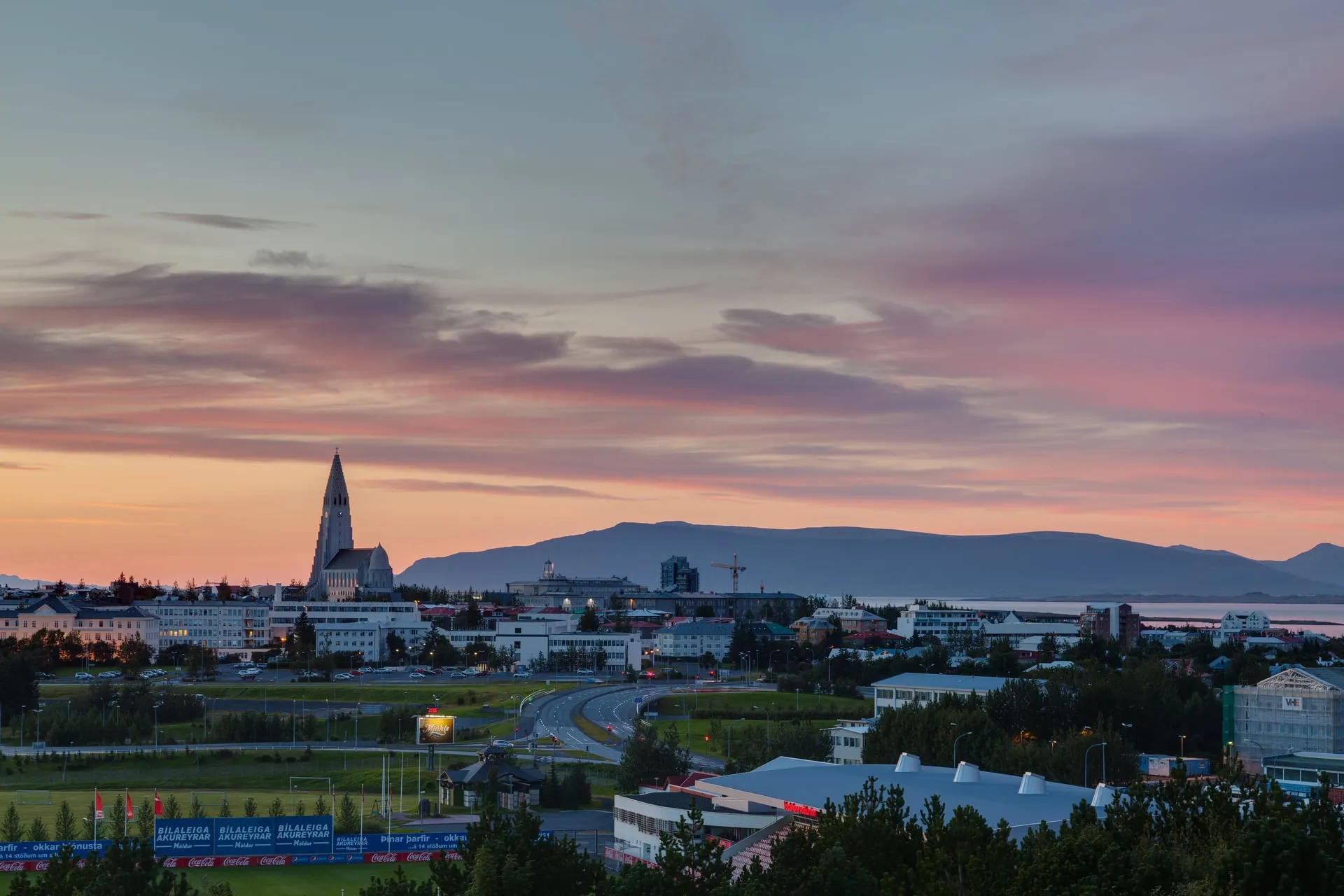
- Hallgrímskirkja — the church everyone photographs. Free to enter, ISK 1,400 for the elevator to the tower. Best view in town.
- Skólavörðustígur — the street leading down from the church, with painted rainbow stripes and the city’s best design and craft shops.
- Laugavegur — the main shopping street. Bars, cafés, bookshops, wool.
- Old Harbour (Grandi) — restored harbour district with seafood, ice cream, the whale-watching pier and Whales of Iceland museum.
- Harpa Concert Hall — free to walk inside. The honeycomb glass façade is the architectural set-piece of the city.
- Sun Voyager — the boat sculpture on Sæbraut, 8 minutes walk east of Harpa. Best at sunrise or sunset.
- Tjörnin pond — small lake in the city centre, framed by City Hall and the Lutheran cathedral. 10 minutes from Sun Voyager.
The pool question
Reykjavík has nine public pools. Three matter for tourists:
- Sundhöllin — Iceland’s oldest public pool, by Hallgrímskirkja. Indoor lap pool, outdoor hot tubs on the roof, sauna. Architectural and central.
- Vesturbæjarlaug — neighbourhood pool in the west. Smaller, more local, terrific Sunday morning energy.
- Laugardalslaug — largest pool, with water slides, multiple hot tubs and an Olympic indoor lap pool. Best for families.
Pool etiquette: shower naked before entering, no exceptions. There are attendants who will turn you back if you don’t. Bring your own towel (or rent for ISK 800).
Eating well in Reykjavík
The shorthand:
- Langoustine soup — Sægreifinn at the Old Harbour. Plastic chairs, world-class soup.
- Lamb soup — Icelandic Street Food, Lækjargata. Free refills.
- Fish and chips — Reykjavík Fish, harbour-side.
- Hot dog — Bæjarins Beztu, the kiosk by the harbour. Order “eina með öllu” (one with everything).
- Special-occasion dinner — Dill, Matur og drykkur, Snaps, Fiskmarkaðurinn. Book a week ahead.
Avoid the obvious tourist traps on lower Laugavegur. Anything with a long picture menu in 6 languages is paying for the view, not the food.
One museum, not three
In one day you have time for one museum. Pick by interest:
- National Museum of Iceland — best for Iceland-as-a-place context. 1,000-year history in 2 hours.
- Saga Museum — best for kids and first-time visitors. Wax figures + audio guide make Viking history concrete.
- Whales of Iceland — best for marine life interest. Life-size models of every whale in Icelandic waters.
- Reykjavík Art Museum (Hafnarhús branch) — best for contemporary art. Erró collection.
If you skip the museum, walk instead.
Where to put a second day
If you have a second day in Reykjavík, the high-value adds are:
- A day trip — Golden Circle (8 hrs) or Reykjanes geothermal route (5 hrs).
- The Perlan museum + viewing deck above the city.
- A whale-watching tour from the Old Harbour (Apr–Oct).
- A long lunch in Grandi at one of the harbour-side restaurants.
- A pool plus a coffee plus a slow walk back along the harbour.
Pace matters more than itinerary. Reykjavík rewards slow days.
See also
- 1 day in Reykjavík — the full hour-by-hour plan
- Iceland in October — the sweet spot for a city break
- What to do in Iceland today — filter by Reykjavík region
Frequently asked questions
Is Reykjavík worth a stop or should you skip it?
Worth a stop. The city is small but characterful — Nordic-modern architecture (Harpa), a working harbour, geothermal pools as everyday social spaces, and excellent restaurants. One full day is the minimum.
How many days do you need for Reykjavík?
One day for the headline sights. Two days lets you do a museum, a long lunch, a pool and dinner without rushing. Three+ days starts to feel slow unless you're using the city as a base for day tours.
What's the best free thing to do in Reykjavík?
Walk Sæbraut from Harpa to the Sun Voyager at low light. The Faxaflói bay, Esjan mountain across the water and the sculpture together is the postcard view, and it costs nothing.
Where do locals actually eat?
Bakeries (Brauð & Co, Sandholt) for breakfast; the harbour soup spots for lunch; Skólavörðustígur or Laugavegur for dinner. Locals avoid the over-priced tourist places on the strip — staff at your hotel will steer you right.
Should I do the Blue Lagoon from Reykjavík?
Only as a transit stop on the day you arrive or depart, since it's near the airport (50 km from Reykjavík). For an in-city geothermal experience, use Sky Lagoon (closer) or just go to a local pool — better, cheaper, more authentic.
Is Reykjavík safe at night?
Yes. Reykjavík is one of the safest capitals in the world. The weekend bar district on Laugavegur gets rowdy after midnight but is not dangerous. Solo travellers, women and families walk home without issue.