Guide
Iceland in winter
A practical winter guide to Iceland — when to come, what's open, what's closed, the ice caves, the aurora season, the driving and the storm-buffer rules.
Key facts
- Winter window
- November through mid-March
- Darkest day
- ~21 December (4 hours of usable light)
- Aurora season
- September through early April
- Ice cave season
- November–March (weather dependent)
- Highland access
- Closed November–May; no exceptions
What winter gives you that summer doesn’t
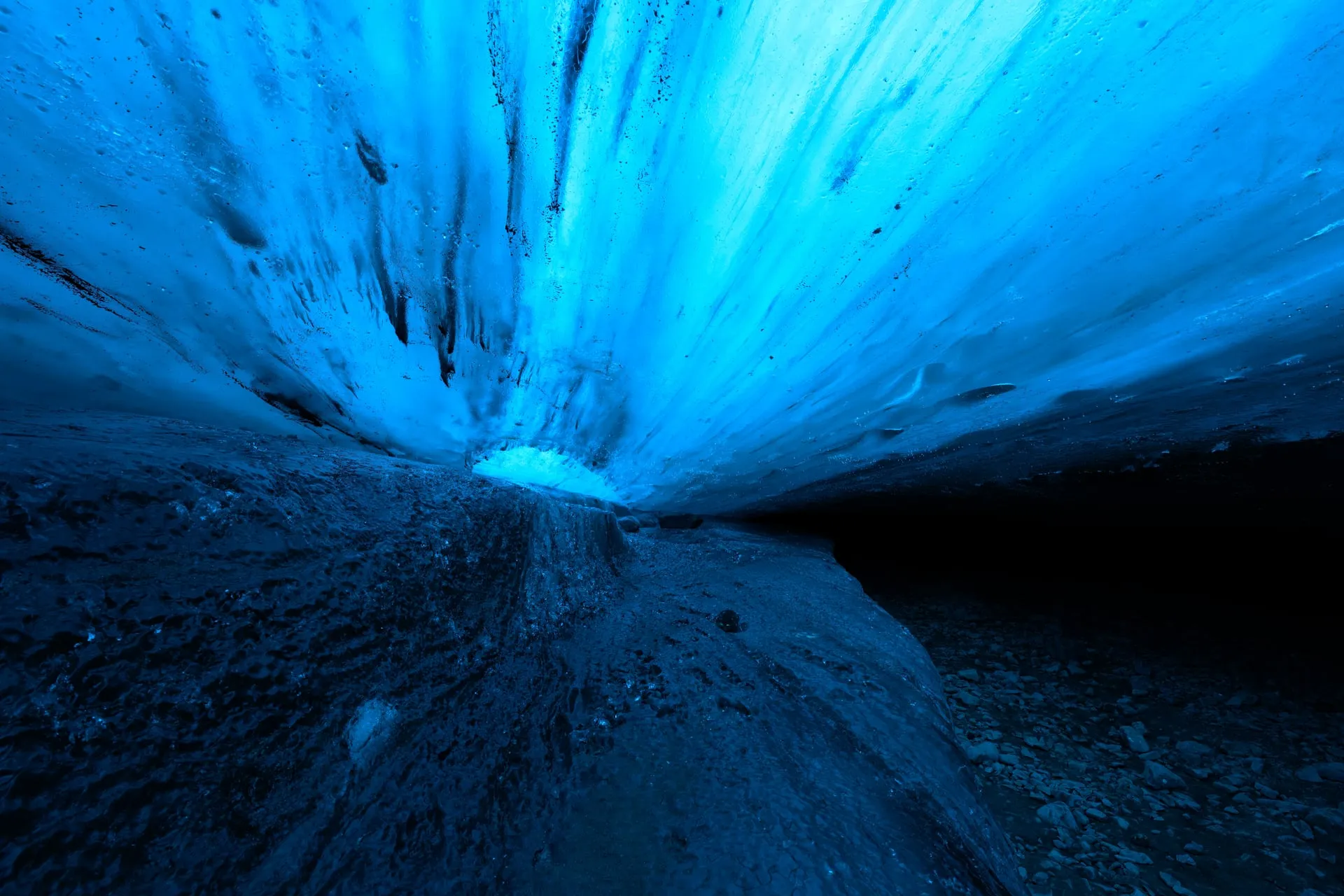
- Ice caves. Inside the Vatnajökull glacier — only stable November through March.
- Aurora season. September–April; statistically best November–March in dark-sky areas.
- Empty headline sights. Reynisfjara and Seljalandsfoss in November–February have one-tenth the crowds.
- The long blue hour. Iceland in winter has 2–3 hours of golden + blue twilight, twice as long as in summer.
- Snow waterfalls and frozen lagoon edges. Visually different from any summer photo you’ve seen.
- Hot springs in snow. Specifically the free natural pots; commercial spas are open all year.
What winter takes away
- Highland access — every F-road is closed.
- Whale watching reliability — possible from Reykjavík year-round but pelagic species move offshore.
- Long road-trip flexibility — you can’t drive far north or east in worst storms.
- Daylight for long hikes — only 4–6 hours of usable light in December and January.
- Open puffin colonies — all closed; puffins return mid-May.
The driving reality
Iceland’s main roads in winter are:
- Route 1 from Borgarnes east to Höfn — paved, ploughed, almost always open with normal precautions.
- The Golden Circle (Route 36 + 37 + 35) — paved, year-round.
- Reykjavík’s urban grid — fine.
- Roads north of Akureyri — usually open but storms close them more often than Route 1.
- F-roads — all closed. No exceptions, no negotiations.
You’ll need:
- A winter-ready rental — winter rentals come on winter tyres, usually studded (studs are permitted in Iceland from November to mid-April, not required). Confirm at the rental desk.
- A 4×4 — not strictly required for Route 1, but recommended. Adds €15–€30 per day; buys you confidence in snow drifts and side-road parking.
- A weather check at vedur.is + umferdin.is every morning before driving.
The storm buffer rule
Build at least one buffer day per four active days. Storms close roads, cancel tours and ground domestic flights regularly in winter. The buffer is the difference between “we adapted” and “we lost the trip.”
Cancel-friendly hotel bookings are the second non-negotiable rule. Pay the extra €10–€20 per night for the refundable rate — it’s the cheapest insurance you’ll buy.
When NOT to come in winter
- 20 December to 3 January — Christmas + New Year peak. Hotels double in price, ice cave slots are sold out months ahead, restaurants close for Christmas. Avoid unless you’re specifically here for the local culture (Þorláksmessa skate, New Year fireworks).
- Early November if you specifically want snow — sometimes the country is still brown.
- Late March if you specifically want winter — aurora odds drop, snow melting, ice caves closing.
When TO come in winter
- Late November — full winter arrived, no Christmas premium, dark enough for aurora.
- Early–mid January — quietest week of the year, lowest prices, ice caves at peak.
- February — balance of light, aurora, ice caves, and lower-than-Christmas pricing. Most experienced repeat-travellers’ favourite winter month.
Where the 5-day winter itinerary fits
The 5-day winter itinerary covers Reykjavík + Golden Circle + South Coast to Jökulsárlón + an ice cave. It’s the canonical first-time winter plan and runs reliably with cancel-friendly bookings and a Reykjavík bookend.
See also
- 5 days in Iceland in winter — the canonical winter plan
- Iceland in November — the calmest winter month
- Iceland in February — most repeat-travellers’ favourite
- Ice cave tours — the winter signature
Frequently asked questions
What's the best month for winter Iceland?
February. Daylight is back to 8–9 hours, aurora season is still strong, ice caves are at their peak, and prices are lower than December's Christmas premium.
Is it dark all day?
No. Even on the darkest day (21 December) there are 4 hours of usable light in the south. The light is unusual — long civil twilight at both ends — and is one of the reasons photographers love December.
Can you drive the Ring Road in winter?
Yes but it's risky. Storms close stretches 3–6 days each winter. Plan 10+ days with at least 2 buffer days. Or do just the Golden Circle + South Coast as far as Jökulsárlón, which is much more reliable.
How cold does it get?
Coastal Iceland is mild — −5 to +5 °C is typical. The wind chill is what hurts. Inland and in the Highlands it can hit −15 °C. Layered merino + fleece + waterproof shell handles everything.
What about ice cave tours?
Genuine glacier ice caves are weather-dependent natural features. Tours run November–March from Jökulsárlón through licensed operators. Book months ahead for Christmas / New Year. Independent ice-cave access is illegal and dangerous.
Is the Blue Lagoon better in winter?
It's atmospheric in snow but no warmer than summer. Sky Lagoon, Krauma and free natural pots are arguably more striking in winter snow. Pick by location and budget.
How real is the aurora?
Real and frequent if conditions cooperate. Five clear winter nights gives you 50–70 % odds of seeing them at least once. The forecast on vedur.is is reliable; KP 2+ with clear skies anywhere outside city lights is enough.