Iceland in February
Iceland in February
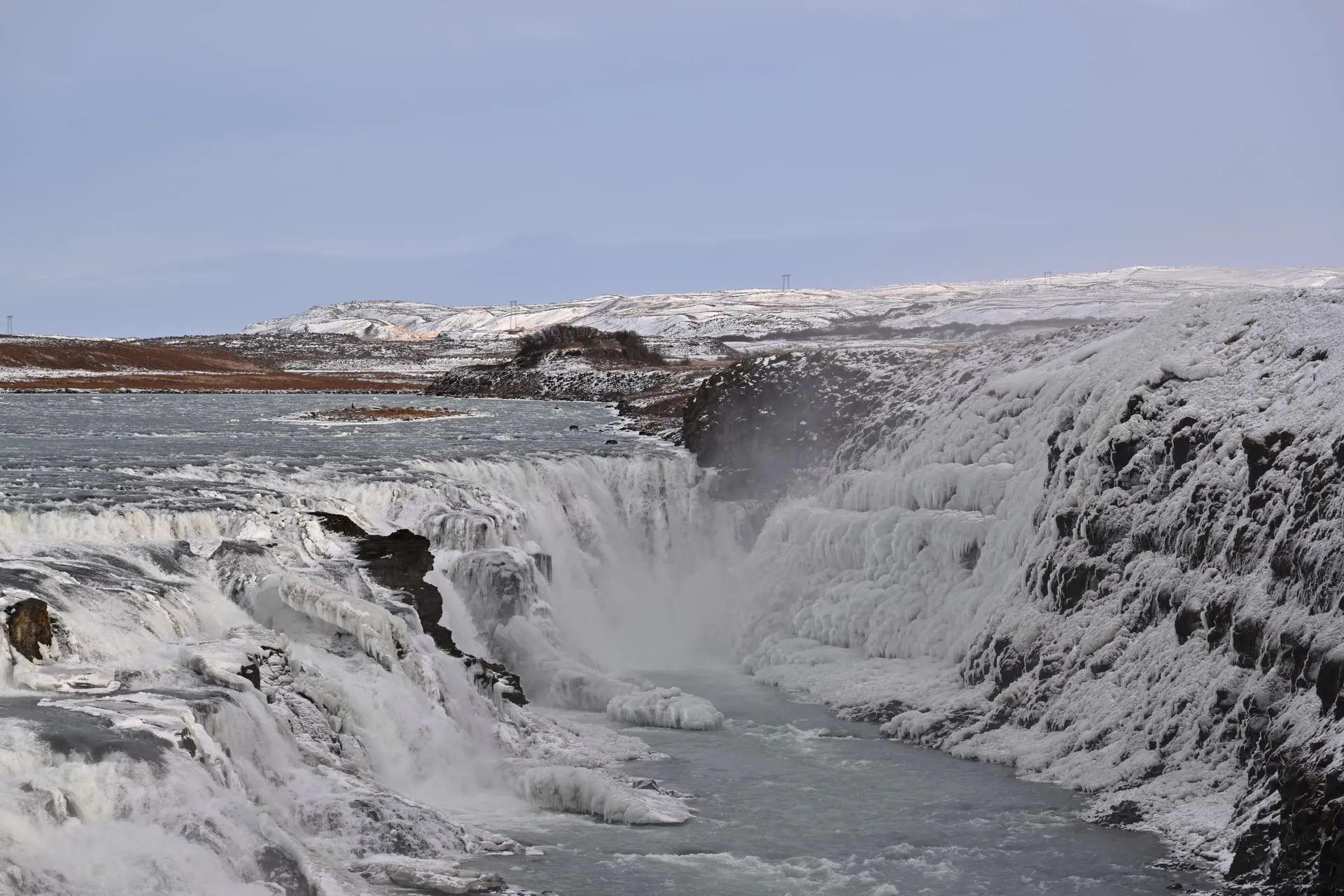
February is similar to January but with more daylight — the sweet spot for winter Iceland trips: ice caves, aurora and increasingly photogenic light.
Key facts
- Usable daylight
- Around 7 hours early February rising to 9–10 hours by month-end — the winter sweet spot for daylight
- Typical temperature
- Highs near 3°C, lows around -3°C in Reykjavík; deep snow cover inland and on the South Coast
- Ice caves
- Peak natural ice cave season — Vatnajökull outlet caves at their best access, guided only
- Pricing
- Mid-range winter — past the holiday peak, cheaper than Christmas/New Year, busier than November
- Highlands
- All F-roads still closed for winter; central Highlands inaccessible
- Avg high
- 3°C
- Avg low
- -3°C
- Daylight
- ~8 h
- Season
- winter
- Weather note
- Still stormy, but daylight is climbing fast — budget spare days for closures.
- Road note
- Route 1 and the Golden Circle plowed first; storm closures still possible east of Vík; F-roads closed.
February is the winter sweet spot. You keep peak ice caves and strong aurora, but daylight is climbing fast — from about 7 hours early in the month to 9–10 by the end. Weather is still volatile, so the rule holds: build in spare days for storm closures.
What is the weather and daylight like in February?
Daylight rises quickly this month — roughly 7 hours at the start, 9–10 by month-end. That’s enough light to drive a real route without the brutal compression of December and January.
Temperatures sit near 3°C high and -3°C low in Reykjavík, with deep snow on the South Coast and inland — often the most photogenic snow of the season. Storms are still common, and wind drives the closures. Read the Veður.is forecast and warnings before each drive instead of guessing from the window.
What is open and what is closed in February?
The Ring Road and the Golden Circle stay open and are plowed first, so the South Coast and the loops run all month. Storm closures are still possible, most often east of Vík — check road.is each morning.
Highland F-roads remain closed for winter. Natural ice caves are at peak access and run as guided tours from the Vatnajökull outlets — operators are well established by now and many caves are at their best of the season. Year-round attractions, pools and museums keep normal hours.
What should you actually do in February?
Book a natural ice cave tour — February is peak season and access is often the best of the winter. Hunt the aurora on clear nights; the dark windows are still long.
Use the extra daylight for the full South Coast — Seljalandsfoss, Skógafoss, Reynisfjara, Jökulsárlón, Diamond Beach and Stokksnes — and consider a guided glacier hike at Skaftafell. Finish in a hot spring or geothermal pool. February also lands the Winter Lights Festival in Reykjavík, which lights up the dark city for a long weekend.
What should you avoid in February?
Don’t over-schedule despite the extra light — winter driving is slow and storms still eat days. Two or three real stops a day is a sane plan.
Don’t drive in a red wind warning, and don’t attempt one-day Reykjavík → Jökulsárlón round trips; base a night in Vík or Höfn. The Highlands are still closed — don’t try a closed F-road. Check SafeTravel before any winter drive and follow the live forecast.
How busy and expensive is February?
February is mid-range winter. It’s past the Dec 20–Jan 2 holiday peak, so prices are well below Christmas and New Year, but it’s busier and a touch pricier than November as travellers chase the longer days and reliable ice caves.
Crowds are moderate. Ice cave tours and South Coast hotels in Vík and Höfn still sell out on popular dates, so book those ahead. Overall, February gives you the best daylight-to-winter-atmosphere ratio of the cold months.
See also
- Ice cave tours — peak access in February
- Northern lights — still long dark nights
- Glacier hikes — guided, at Skaftafell
- 5-day winter itinerary — a realistic February route
- Iceland in winter — the full-season overview
- Adjacent months: January · March
Book early
- Ice cave tours
- Aurora-related hotels (Höfn, Stokksnes-area, Vík)
What to pack
- Real winter coat
- Waterproof layers
- Insulated boots
- Micro-spikes
Things to avoid
- Highlands
- One-day round trips to Jökulsárlón
Frequently asked questions
Are ice cave tours still running in February?
Yes — February is peak ice cave season. Operators are well established at this point and many caves are at their best access.
When does daylight return in Iceland?
By late February you'll have 8+ hours of usable light; by mid-March it's similar to anywhere in Europe.
Is February a good time for the northern lights?
Yes — February still has long dark nights, so aurora chances stay strong. As always, cloud cover, not solar activity, is the limiting factor.