Iceland in March
Iceland in March
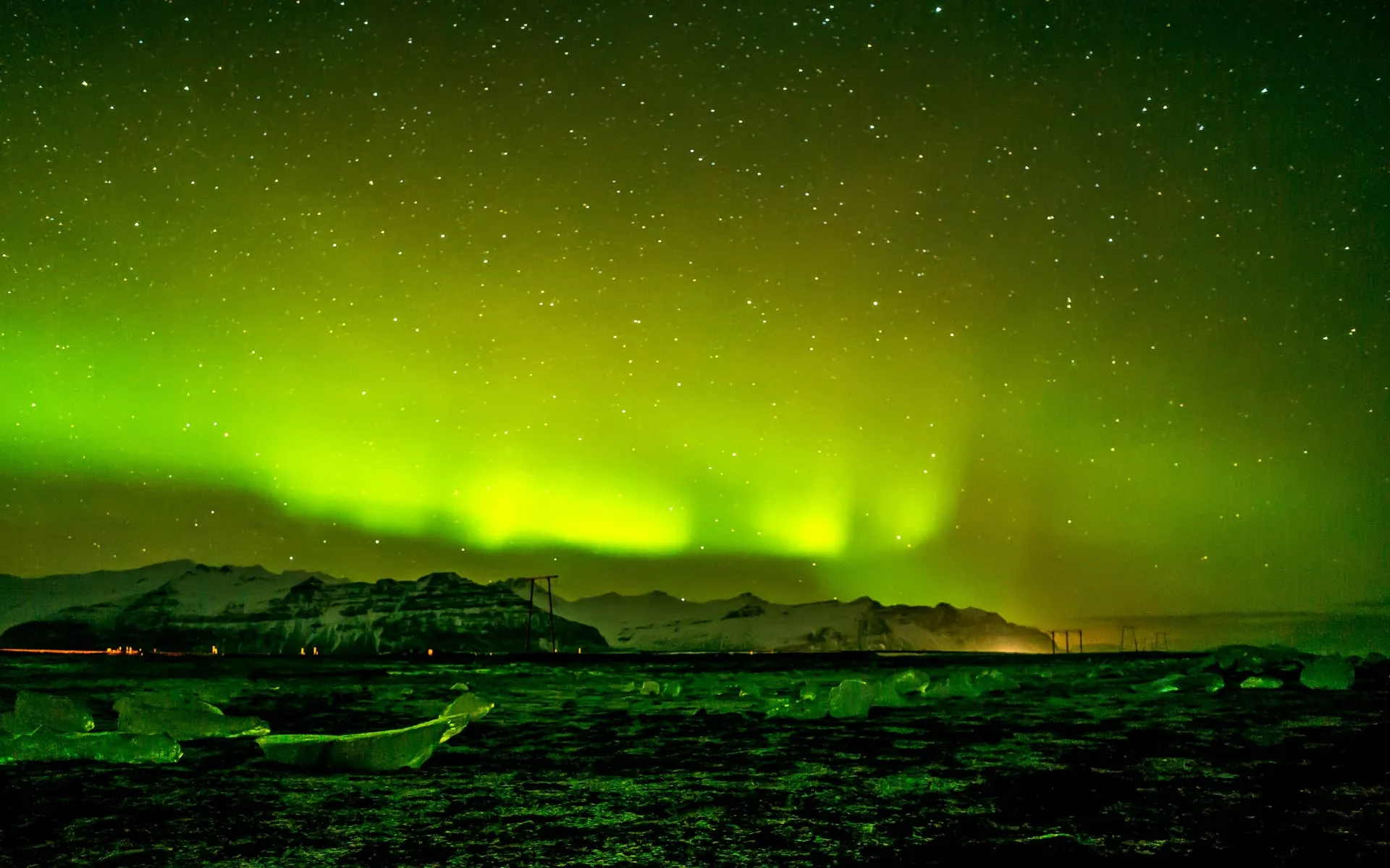
March is shoulder season — late winter but with rapidly returning daylight, lingering ice caves, and the equinox aurora window.
Key facts
- Daylight
- ~10 h at the start of March, ~13 h by month-end
- Average temperature
- 4°C high / -2°C low in Reykjavík (colder inland)
- Natural ice caves
- Usually accessible in early March, then close as it warms
- Highlands / F-roads
- Closed (open late May–June)
- Aurora
- Strong on clear nights, often peaking near the spring equinox
- Avg high
- 4°C
- Avg low
- -2°C
- Daylight
- 10–13 h
- Season
- spring
March is the month winter loosens its grip without losing its best features. You still get ice caves and aurora at the start, but the days stretch fast and prices sit below the December–February peak. It is one of the most underrated months to visit.
What is the weather and daylight like in March?
Daylight swings hard this month. You start near 10 hours of usable light and finish close to 13 — Iceland gains roughly seven minutes a day, so the end of March feels nothing like the start. By the spring equinox (around 20 March) day and night are even.
Temperatures hover around 4°C high and -2°C low in Reykjavík, colder inland and on the glaciers. Snow is still normal, especially east of Vík. Storms remain frequent, so treat any multi-day plan as provisional and check Veður.is and road.is each morning.
What is open and what is closed in March?
The Highlands and F-roads are firmly closed and stay that way until late May or June — see when Iceland’s F-roads open in 2026. Do not plan a Landmannalaugar or Þórsmörk drive now.
Natural ice caves under Vatnajökull are on their way out. Early March they usually still run; by late March rising temperatures make many unsafe and operators close them or switch to man-made tunnels (Katla near Vík, the Langjökull ice tunnel). If a glacier ice cave is a must-do, book the first half of the month.
The South Coast, Golden Circle, Reykjanes and Snæfellsnes are all accessible on the main, plowed roads.
What should you actually do in March?
Treat it as end-of-winter. The aurora is still strong on clear nights and the longer twilight gives you more comfortable hunting windows than midwinter. Chase ice caves early, then pivot to glacier hikes on Sólheimajökull or Skaftafell, which run year-round.
The South Coast classics — Seljalandsfoss, Skógafoss, Reynisfjara, Jökulsárlón and Diamond Beach — are at their photogenic best with snow still on the ground and softer, lower light. Bring micro-spikes; paths ice over.
What should you avoid in March?
Do not build a trip around the Highlands or expect summer-level access — the interior is closed and snowbound. Do not assume late-March ice caves; confirm with the operator before you pay. And do not over-schedule: a single red wind warning can erase a driving day, so keep a buffer and never drive in red SafeTravel warnings.
How are crowds and prices in March?
This is shoulder-season value. You get real winter scenery and aurora at noticeably lower accommodation and tour prices than the Christmas-to-February peak, with thinner crowds at the headline stops. Ice cave tours early in the month still sell out a week or two ahead, so book those first.
See also
- Iceland in February — peak ice-cave + aurora winter
- Iceland in April — the next shoulder month, spring proper
- Northern lights in Iceland
- Photography stops
- When Iceland’s Highland F-roads open in 2026
Book early
- Ice cave tours (early March only)
What to pack
- Warm waterproof coat
- Layers
- Waterproof boots
Things to avoid
- Late-month ice cave booking (some caves close)
Frequently asked questions
Are ice cave tours still possible in March?
Early March, yes; by late March many natural caves close as temperatures rise. Operators move to man-made tunnels (Katla, Langjökull).
When does spring arrive in Iceland?
Slowly. April is when you'll feel it. March is still functionally winter, just with longer days.
Are the Highlands open in March?
No. The F-roads stay closed and snowbound until late May or June. Stick to the coastal Ring Road and the main southern and western routes.