Iceland in April
Iceland in April
April is shoulder season at its best — long days, fewer crowds, no ice caves but a feeling of spring after a long winter.
Key facts
- Daylight
- ~13 h at the start of April, ~16 h by month-end
- Average temperature
- 6°C high / 1°C low in Reykjavík
- Natural ice caves
- Closed for the season
- Puffins
- First birds return to southern colonies in late April
- Highlands / F-roads
- Still closed (open late May–June)
- Avg high
- 6°C
- Avg low
- 1°C
- Daylight
- 13–16 h
- Season
- spring
April is shoulder season at its most rewarding: long, usable days, prices well below summer, and the headline sights open and uncrowded. You trade ice caves and reliable aurora for spring light and breathing room.
What is the weather and daylight like in April?
April gains daylight even faster than March. You begin near 13 hours and end close to 16 — by late April it barely gets properly dark. Temperatures climb to around 6°C high and 1°C low in Reykjavík, though wind keeps it feeling colder.
Spring here is not gentle. Sunny mornings flip to sleet by afternoon, and snow at higher elevations is normal all month. Roads stay muddy where snow melts. Keep checking Veður.is and road.is and pack for four seasons in a day.
What is open and what is closed in April?
The Highlands and F-roads remain closed and will not open until late May or June — full timing in when Iceland’s F-roads open in 2026. Do not plan interior routes.
Natural glacier ice caves are closed for the season; it is too warm for safe access. The Langjökull tunnel and the natural ash-banded Katla cave still run if you want a cave experience.
The Ring Road and the main southern and western routes are open and passable with sensible weather buffers, which makes April a genuine Ring Road month if you stay flexible.
What should you actually do in April?
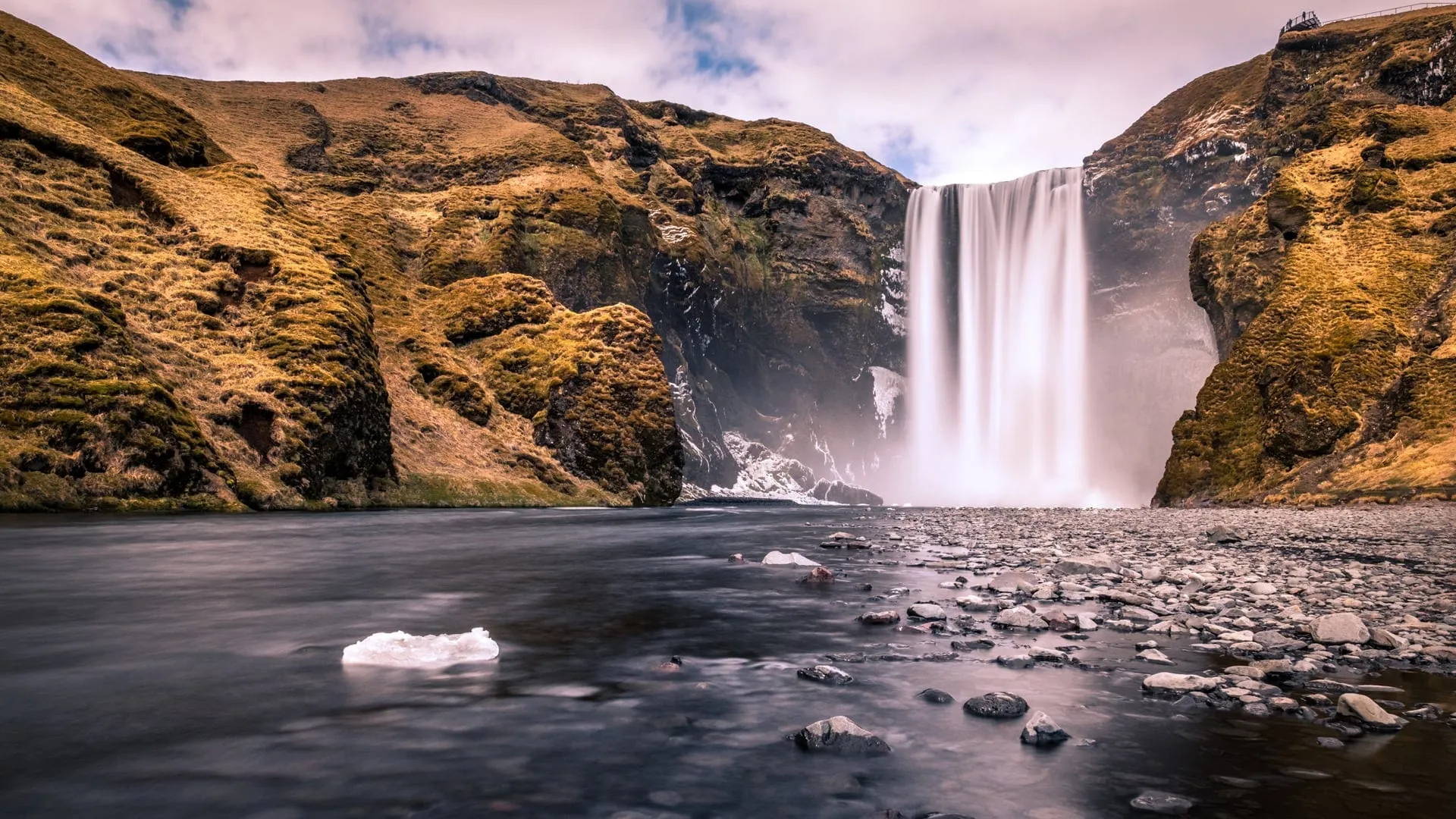
This is the calm-before-the-crowds window. The South Coast — Seljalandsfoss, Skógafoss, Reynisfjara — and the Golden Circle are at peak shoulder value: open, accessible and far quieter than June. Waterfalls run hard with meltwater.
Early April still offers aurora on dark, clear nights; by mid-to-late April the sky is too bright. The first puffins also start arriving at southern colonies late in the month — see where to see puffins in Iceland for timing and spots like Dyrhólaey.
What should you avoid in April?
Do not plan around the Highlands or expect summer access — the interior is closed. Do not expect natural ice caves; they are gone until autumn. Do not bank on aurora if you arrive late in the month. And around Easter, book accommodation early, as Icelanders travel domestically and rural hotels fill.
How are crowds and prices in April?
April is one of the best value-to-experience ratios of the year. You get long days and the marquee sights without summer pricing or summer queues. The catch is purely weather — accept variable conditions and you are rewarded with quiet roads and lower bills.
See also
- Iceland in March — late winter, last of the ice caves
- Iceland in May — green returns, puffins settle in
- Waterfalls in Iceland
- Photography stops
- Iceland without a car
- When Iceland’s Highland F-roads open in 2026
Book early
- Easter weekend hotels
What to pack
- Layers
- Waterproof
- Shoes that handle mud
Things to avoid
- Highlands (still closed)
- Expecting ice caves
Frequently asked questions
Can you still see the northern lights in April?
Possible until mid-April when nights are still dark enough. Late April becomes too bright.
Is April good for the Ring Road?
Yes, with sensible weather buffer days. Most of the Ring Road is open.
Are there puffins in Iceland in April?
The first birds usually return to southern colonies like Dyrhólaey in late April. For reliable viewing, May through August is better.