Where to see puffins in Iceland — June 2026 update
Where to see puffins in Iceland in 2026 — Dyrhólaey, Vestmannaeyjar, Borgarfjörður eystri and Látrabjarg. Ashore mid-April to mid-August, at their June peak.
At a glance
- Season in Iceland
- Mid-April to mid-August (peak early June to late July)
- Best colony
- Vestmannaeyjar — largest Atlantic puffin colony on Earth
- Easiest close-up viewing
- Hafnarhólmi platform, Borgarfjörður eystri (East)
- Car-free option
- Reykjavík Old Harbour boat tour to Akurey / Lundey
- Best time of day
- Early morning and evening, when birds are active at the burrows
- When they leave
- Around mid-August — gone by September
- Location
- Iceland
- Category
- attraction
- Published
- 7 June 2026
- Updated
- 21 July 2026
Source summary
Puffin season dates and colony locations are well-established and stable year on year. The Dyrhólaey nesting closure and all cliff-safety guidance are taken from SafeTravel and the on-site Vegagerðin / Environment Agency signage; always defer to the live sign and SafeTravel notice on the day you visit.
When are puffins in Iceland?
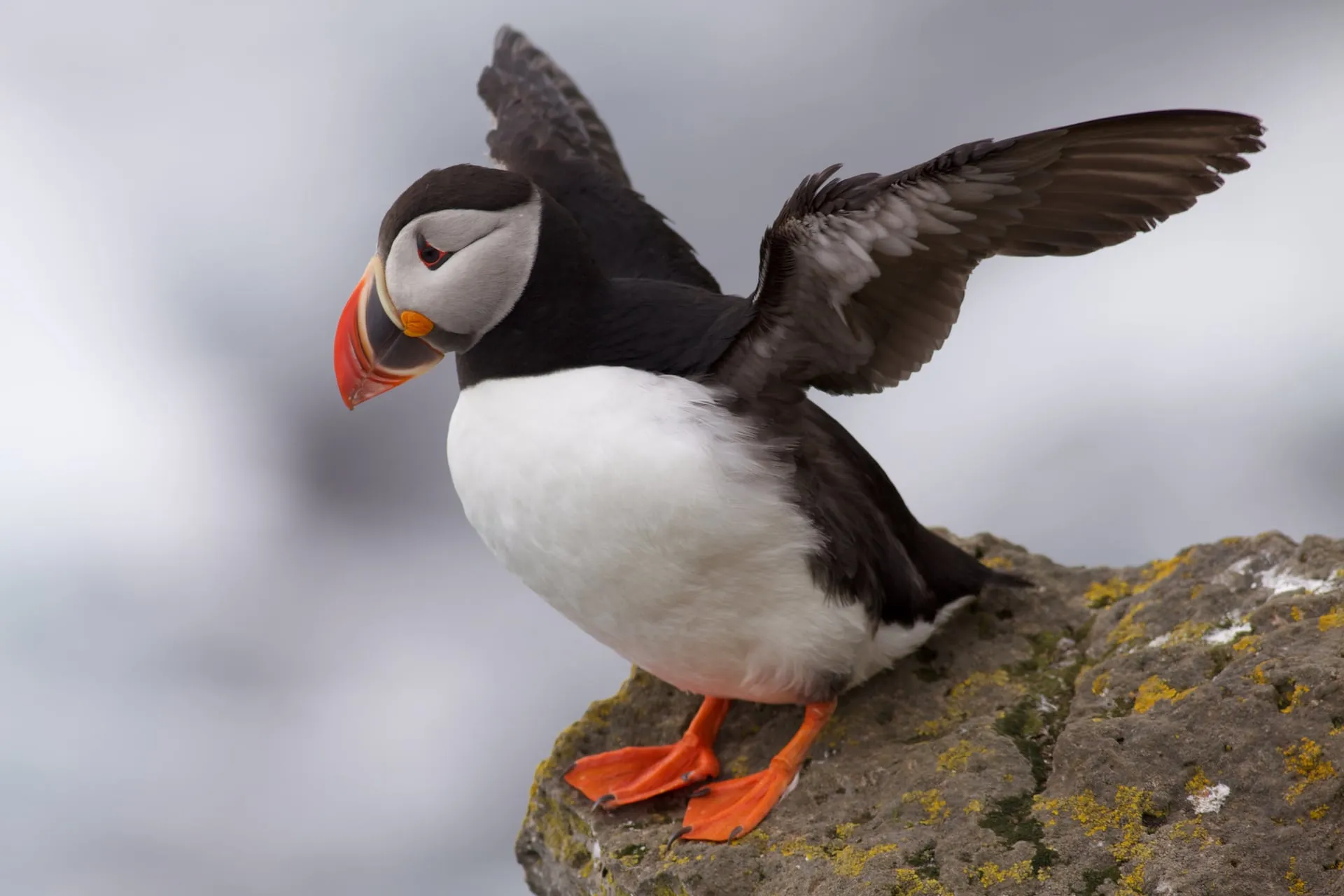
Roughly mid-April to mid-August. The Atlantic puffin (Icelandic lundi) only comes ashore to breed; the rest of the year it lives out on the open ocean.
By early June the season is at its peak. Adults are paired up and tending burrows on the grassy clifftops, so they’re on land for much of the day instead of just flashing past at sea. This is the easiest window of the whole year to actually watch them.
Where’s the best place to see puffins?
There are five places a visitor can realistically reach. In rough order of payoff:
Vestmannaeyjar (Westman Islands) — the single best bet
Vestmannaeyjar hosts the largest Atlantic puffin colony in the world — well over a million birds across the archipelago. Take the Herjólfur ferry from Landeyjahöfn on the South Coast; the crossing is about 35 minutes. On the main island, Heimaey, the cliffs and the Stórhöfði headland are thick with puffins through the summer.
If you only do one puffin stop on a South Coast trip, make it this one.
Borgarfjörður eystri (Hafnarhólmi) — the easiest close-up
In the East Fjords, the small harbour of Hafnarhólmi at Borgarfjörður eystri has a purpose-built wooden viewing platform that puts you within metres of nesting puffins, safely and at eye level. It is the most effortless close-up viewing in the country and the best choice if you’re travelling with kids. It’s a detour off the Ring Road, but a short one.
Dyrhólaey (South Coast, near Vík) — accessible but check the closure
The Dyrhólaey promontory just west of Vík has puffins on its cliffs and is easy to fold into a South Coast day. The catch: the lower area is closed to driving during nesting, typically from mid-May to late June, to protect the birds. The upper viewpoint is usually still reachable.
Dates change year to year — read the sign at the entrance and check SafeTravel before you commit to driving in.
Látrabjarg (Westfjords) — huge cliffs, long drive
Látrabjarg is a 14 km wall of sea cliffs at Iceland’s westernmost point, famous for puffins that sit unusually close to people. The viewing is superb. The downside is pure distance — it’s a long, partly gravel drive deep into the Westfjords, only worth it if that region is already on your route.
Reykjavík boat tours — the car-free option
No car? Boat tours from Reykjavík’s Old Harbour run out to the puffin islands of Akurey and Lundey in Faxaflói bay through the season. You watch from the water rather than a clifftop, but it’s a half-day trip with no driving and it leaves from the city centre.
How do you watch puffins without harming them?
The colonies are working nurseries, and the ground is hollow with burrows. The rules:
- Stay back from the burrow edges. The turf is undermined by nests and collapses under a footstep — that destroys eggs and can pitch you off the cliff.
- Don’t block their flight path to the sea. Puffins launch off the cliff edge to fish; standing on the lip cuts them off from the water and their chicks.
- Keep dogs leashed, and never let anyone chase or corner a bird for a photo.
- Treat the cliffs as dangerous. Iceland’s sea cliffs have no fences and no barriers, the edges crumble, and the wind gusts hard. Every year people get into trouble here. Stay back from the lip and hold children’s hands.
What’s the best time of day?
Early morning and evening. Puffins spend the middle of the day out fishing, then come back to the burrows to socialise and feed chicks when it’s cooler. The low evening light is also far kinder for photography than flat midday sun.
When do puffins leave Iceland?
Around mid-August. Once the pufflings fledge, the adults and young head back out to the open North Atlantic and don’t return until spring. So don’t plan a September puffin trip — you’ll have missed them. The safe window is mid-April to mid-August, with June and July the surest months.
See also
- Photography stops in Iceland — light and timing for the best coastal shots
- Family-friendly stops in Iceland — easy, safe stops including the Hafnarhólmi platform
- Vík — the South Coast base for a Dyrhólaey puffin stop
- Reynisfjara — the black-sand beach next door (and its own cliff-safety warnings)
- Iceland in June — what else is on at peak puffin season
- Iceland in July — the other prime puffin month
Frequently asked questions
Where's the best place to see puffins in Iceland?
Vestmannaeyjar (the Westman Islands) — the world's largest Atlantic puffin colony, a roughly 35-minute ferry from Landeyjahöfn. For an easy close-up without a boat, the Hafnarhólmi viewing platform at Borgarfjörður eystri in the East is the most reliable on the mainland.
Can you see puffins in Reykjavík?
Not in the city itself, but boat tours from the Old Harbour run out to the small puffin islands of Akurey and Lundey in Faxaflói bay during the season. It's the best option if you don't have a car. Tours are seasonal (roughly May to August) and weather-dependent.
When do puffins leave Iceland?
Around mid-August. Once the chicks (pufflings) fledge, the adults and young head out to the open North Atlantic and don't return until the next spring. Plan a puffin trip between mid-April and mid-August — a September visit will miss them entirely.
Is Dyrhólaey open for puffins in June?
Partly. The clifftop viewpoints are usually reachable, but the lower area of Dyrhólaey is typically closed to driving for the nesting season — often from mid-May until around late June. Check the sign at the entrance and the SafeTravel notice before you go, as the dates shift year to year.
What's the best time of day to see puffins?
Early morning and evening. Puffins spend much of the middle of the day out fishing at sea, then gather around the burrows to socialise and feed chicks in the cooler hours. Low evening light is also the best for photos.
Are puffin viewing sites safe for kids?
The Hafnarhólmi platform at Borgarfjörður eystri has railings and is the most family-friendly. Elsewhere — Dyrhólaey, Látrabjarg — the cliff edges have no fences and crumble easily, so hold small children's hands and stay well back from the lip.