Iceland in July
Iceland in July
July is Iceland's peak season — warmest weather, 20+ hours of daylight, every Highland road open, but the most crowded and most expensive month to visit.
Key facts
- Daylight
- 20+ hours; sun barely sets in early July
- Average temperature
- Highs around 14°C, lows around 9°C — the warmest of the year
- Highland F-roads
- Essentially all open, including Sprengisandur and Askja
- Puffins
- Still present through the month at coastal colonies
- Aurora
- Not visible — nights are still too bright
- Crowds and price
- Peak — the busiest and most expensive month to visit
- Avg high
- 14°C
- Avg low
- 9°C
- Daylight
- 20+ h
- Season
- summer
What is the weather and daylight like in July?
July is the warmest and most settled month, and the closest Iceland gets to a guarantee. Highs average around 14°C in Reykjavík, lows around 9°C; a still, sunny July afternoon can feel genuinely warm. It still rains, and the wind still blows — but your odds of a good-weather day are the best of the year.
Daylight is effectively all-day. Early July keeps 20+ hours of usable light with the sun barely dipping below the horizon, easing only gradually toward month’s end. As in June, the practical problem is sleeping through the brightness — bring an eye mask.
What is open in Iceland in July?
Everything. July is the one month where you can plan around any road being open.
- Highland F-roads are essentially all open, including the late ones — Sprengisandur (F26), Askja (F88) and the full Landmannalaugar/Þórsmörk network. They run through mid-September. Conditions still change with rain and meltwater, so check road.is and SafeTravel before any F-road, but closures are rare.
- Puffins are still ashore at the colonies through July and into mid-August — see where to see puffins.
- Whale watching, glacier hikes, ice-tunnel and boat tours all run at full capacity, every day.
What should you actually do in July?
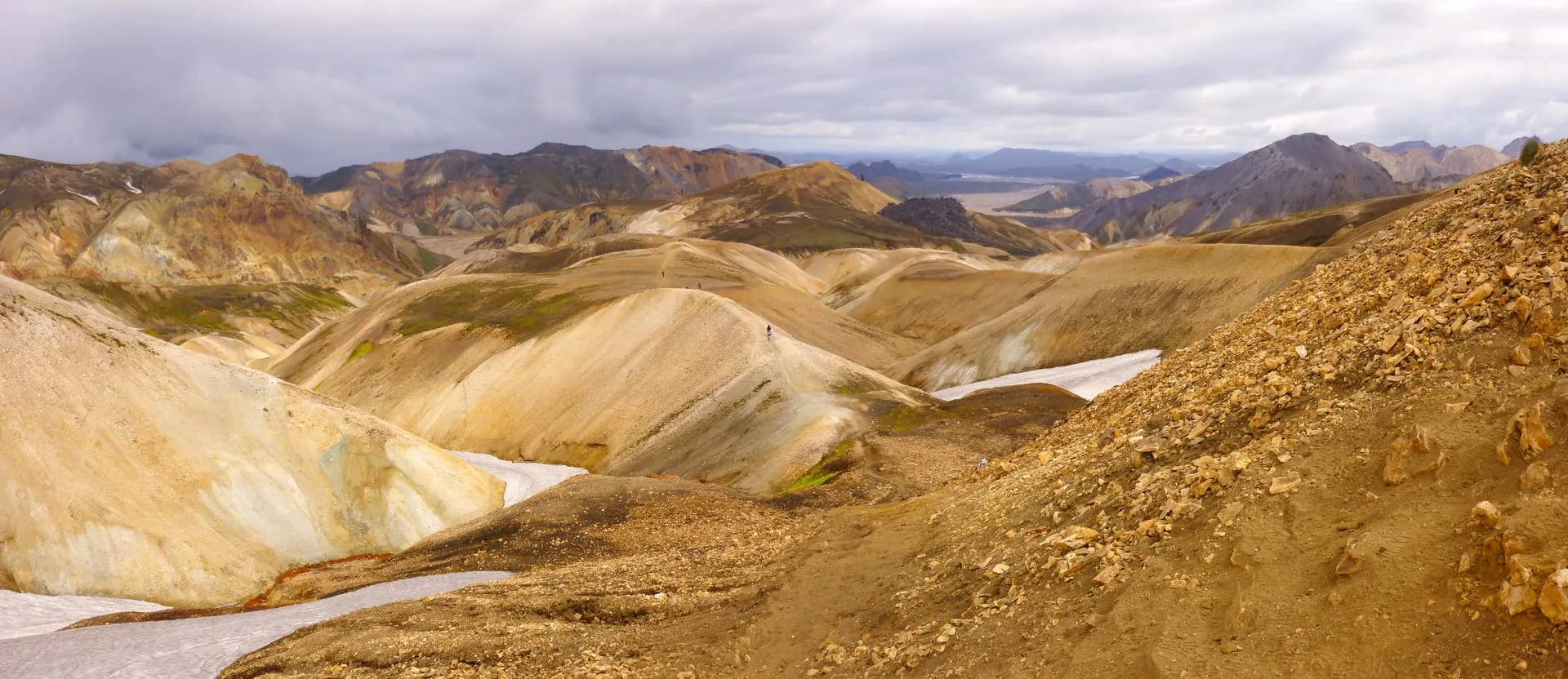
- Drive the Highlands. This is the month for Landmannalaugar’s rhyolite peaks, the Þórsmörk valley and the Askja caldera — terrain that’s snowbound the rest of the year. You need a proper 4×4 and confidence with river crossings.
- Do the full Ring Road. Long days mean you can cover ground and still stop everywhere; the classic loop is at its easiest now (see our 7-day Ring Road itinerary).
- Time your sites for early or late. Geysir, Seljalandsfoss and Jökulsárlón are mobbed from roughly 09:00 to 18:00. Hit them before 09:00 or after 17:00 and you get the same scene with a fraction of the people.
What should you avoid in July?
- Don’t expect aurora. July nights are still too bright; the northern lights are invisible. Aurora season starts again in late August into September.
- Don’t book late. July is the single hardest month for availability. Leaving hotels, popular restaurants and car hire to the last minute means paying the most for the worst options — or finding nothing.
- Don’t only visit mid-day. The crowds at iconic stops in peak hours are the most common July disappointment. Plan around the bus schedule, not against it.
How busy and expensive is July?
This is the peak — the busiest and priciest month of the year. Accommodation, car hire and tours hit their annual maximum, and the famous sites are full through the middle of the day. Book hotels and rental cars 3+ months ahead, reserve Reykjavík and Höfn restaurants, and accept that you’re trading crowds for the most reliable weather Iceland offers. If you can shift to June or late August you’ll get similar daylight for less money and fewer people.
See also
- Where to see puffins in Iceland — July is still prime puffin season
- When Iceland’s Highland F-roads open in 2026 — all routes open by July
- How to check road conditions in Iceland — road.is and SafeTravel
- Photography stops in Iceland — beating the midday crowds
- Jónsmessa and Icelandic midsummer — the midnight-sun folklore night (June 24)
- 7-day Ring Road itinerary — the full summer loop
- Iceland in June and Iceland in August — the neighbouring months
Book early
- Hotels (3+ months)
- All popular restaurants in Reykjavík and Höfn
- Highlands accommodation
What to pack
- Layered (warm at night, mild at midday)
- Lightweight waterproof
- Sunglasses
- Eye mask
Things to avoid
- Showing up without booking
- Crowded times at iconic sites (visit early or late)
Frequently asked questions
Is July too crowded for Iceland?
Iconic sites (Seljalandsfoss, Geysir, Jökulsárlón) are crowded mid-day. Plan around the bus tour schedule — early morning or after 17:00 is much better.
Are the Highlands open in July?
Yes, fully — F-roads (Sprengisandur, Kjölur, Landmannalaugar, Þórsmörk) open in early-mid June and run through mid-September.
Can you see puffins in Iceland in July?
Yes. Puffins are ashore at the colonies until about mid-August, so July is still a prime month — Vestmannaeyjar, Dyrhólaey, Borgarfjörður eystri and Látrabjarg are all good. They leave for the open ocean by September.