Jónsmessa — Iceland's midsummer night
Jónsmessa (June 24) is Iceland's midsummer folklore night under the midnight sun — what the legends say and what to actually do on the brightest night.
At a glance
- Date
- June 24 (St John's Eve, Jónsmessunótt, is the night of the 23rd–24th)
- What it is
- St John's Eve / Day — a midsummer folklore night, not a public holiday
- Daylight
- ~21 hours of usable light; the midnight sun barely dips below the horizon
- Reality check
- Folklore and a natural phenomenon, not a big organised festival
- The folklore
- Cows speak, seals turn human, the hidden folk are abroad, dawn dew heals
- What to do
- Midnight hike or drive, a late geothermal soak, all-night golden-hour photography
- Location
- Iceland
- Category
- editorial
- Published
- 7 June 2026
- Updated
- 7 June 2026
What is Jónsmessa?
Jónsmessa is St John’s Mass — the feast of John the Baptist, on June 24. The name is simply Jóns messa, “John’s Mass.” It lands right beside the summer solstice (June 20–21), which makes it the symbolic heart of Iceland’s midnight-sun period.
The folklore attaches to Jónsmessunótt, midsummer night — the night of June 23rd into the 24th. That’s when, in the old stories, the strange things are supposed to happen.
One thing to be honest about up front: this is a folklore night, not a festival. Iceland doesn’t mark midsummer with bonfires, parades or a town-square gathering the way Sweden or Finland do. There’s no single event to show up to. The magic is in the stories and the light, not an organised programme.
What does the Jónsmessa folklore say?
This is the fun part — and it’s tradition, not fact. Folklore holds that on Jónsmessunótt:
- Cows gain the power of speech. Listen at the byre and they’ll talk.
- Seals come ashore and shed their skins to take human form for the night — the selkie motif that runs through Icelandic and wider North-Atlantic folklore.
- The huldufólk — the hidden folk — and the elves are abroad, moving about more freely than on any other night.
- The dawn dew heals. Rolling naked in the Jónsmessudögg, the midsummer-morning dew, was said to cure sickness and ease aches. (Few people actually do this. The grass is cold.)
There’s also the crossroads legend: sit at a place where four roads each lead to a different church, and through the night supernatural beings will come and try to tempt you with gifts and riches. Stay silent and refuse them all until dawn, and you’re rewarded; give in or speak, and it ends badly. It’s the most theatrical of the Jónsmessa tales.
Tell these as what they are — old stories that give the brightest night of the year a bit of mischief.
What’s actually special about late June — the midnight sun
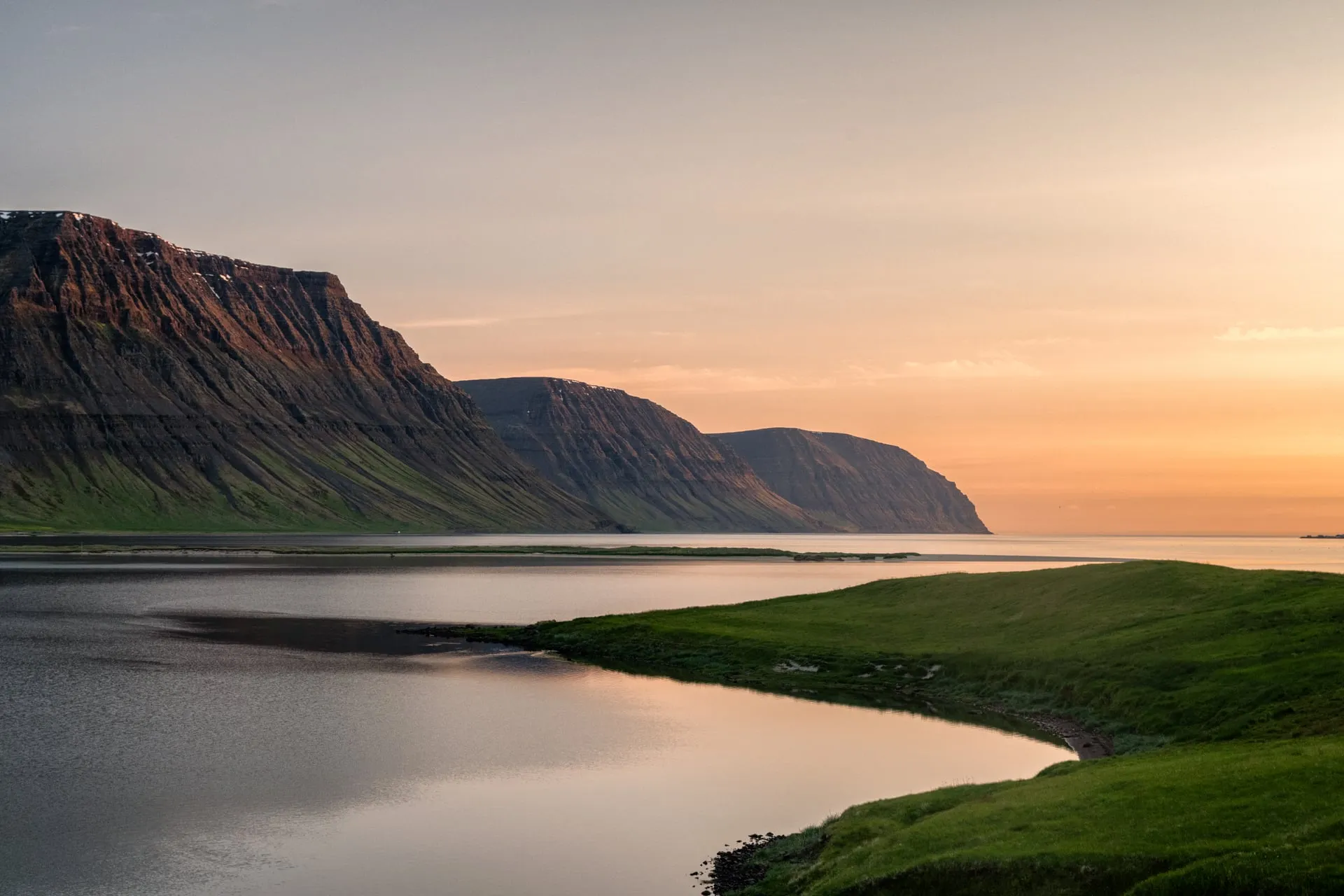
The real phenomenon behind Jónsmessa is the midnight sun. Around June 24, Reykjavík gets roughly 21 hours of usable daylight. The sun sinks toward the horizon near midnight but barely sets — so instead of darkness you get a long, low golden light and hours of orange twilight.
“Night” effectively disappears. It stays bright enough to hike, drive or read outside at 1am. This — not the folklore — is the genuine reason late June stands apart, and it’s what’s worth planning around.
Exact sunrise and sunset shift with your dates and how far north you are (the north and the Westfjords get even more). Check the real times for your trip at Veður.is rather than trusting a round number.
What should you actually do around June 24?
Use the light. The best things to do are the ones the daylight makes possible:
- Stay up for the midnight sun. A midnight hike or drive is the signature experience — the landscape glows, the light is golden for hours, and the tour buses have all gone home. A quiet coastal viewpoint near midnight is hard to beat.
- Soak late. A geothermal pool or hot spring after midnight, under a bright sky, is the most relaxed way to do a “midsummer night.” Most public pools have generous summer hours; check the specific one.
- Shoot all night. For photographers this is the prize: a golden hour that lasts hours, not minutes. See our photography stops guide for where the light works best.
Keep route specifics to the pages that cover them — pick a viewpoint or a spring you’re already near rather than driving across the country for the date itself.
Anything practical to know?
Two things:
- Bring an eye mask. With 21 hours of light you will not sleep on instinct — blackout curtains and a mask matter more than anything in your bag. Late June visitors consistently underestimate this.
- Nothing closes for it. Jónsmessa isn’t a public holiday, so shops, pools, fuel stations and sights keep normal summer hours. Plan your day exactly as you would any other late-June day; the only difference is that the day never really ends.
For the wider month — weather, what’s open, the Highlands opening — see our Iceland in June guide, which also flags Jónsmessa.
See also
- Iceland in June — the full month: midnight sun, weather, what’s open, and Jónsmessa in context
- Iceland in July — the next month of long light, with every F-road open
- Photography stops in Iceland — making the most of a golden hour that lasts all night
- Hot springs in Iceland — where to soak late under the midnight sun
- Where to see puffins in Iceland — late June is also peak puffin season
- 7-day Ring Road itinerary — the classic summer loop to build a midnight-sun trip around
Frequently asked questions
When is Jónsmessa?
June 24 every year. The folklore centres on Jónsmessunótt — midsummer night, the night of June 23rd into the 24th — which falls just after the summer solstice (June 20–21), the brightest point of the Icelandic year.
Is Jónsmessa a public holiday or festival in Iceland?
No. Jónsmessa is not a public holiday and there's no big organised event — set that expectation honestly. It lives in folklore and the odd local mention rather than bonfires or parades like Scandinavian midsummer. Shops, pools and sights keep normal summer hours, so it's a normal working day with extraordinary light.
What is the midnight sun like in late June?
Around June 24 Reykjavík gets roughly 21 hours of usable daylight. The sun dips toward the horizon near midnight but barely sets, so true darkness never comes — instead you get hours of low golden light and a long orange twilight. It's bright enough to hike or drive at 1am. Check exact sunrise and sunset for your dates at Veður.is.
What do Icelanders do on Jónsmessa?
Honestly, most do very little — it's a quiet folklore date, not a party. Those who mark it tend to use the light: an evening or midnight walk, a late soak in a hot spring or pool, or simply staying up because the night never really arrives. The traditions (the healing dew, the speaking cows) are told as charming stories, not widely practised rituals.
What is the Jónsmessa folklore about?
Tradition says that on midsummer night cows gain the power of speech, seals come ashore and shed their skins to take human form, and the huldufólk (hidden folk) and elves are abroad. Rolling naked in the dawn dew, the Jónsmessudögg, is said to heal. One legend has you sit at a crossroads where four roads each lead to a church while supernatural beings try to tempt you with gifts. It's all folklore, not fact — but it's the fun of the night.