Iceland in January
Iceland in January
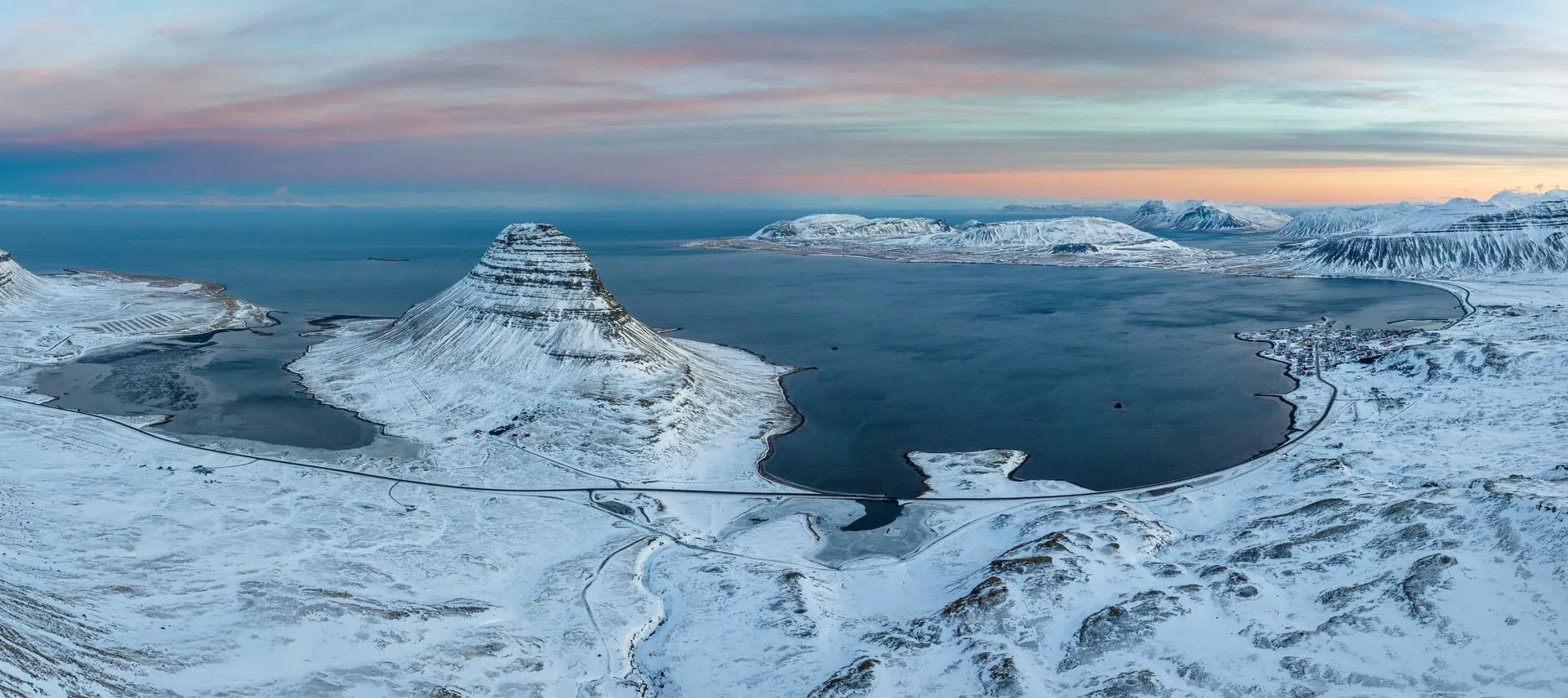
January is deep winter — short daylight, real snow, the best chance of ice caves and one of the most atmospheric months in Iceland.
Key facts
- Usable daylight
- ~5 hours of daylight plus ~7 hours of twilight (longest dark nights of the season for aurora)
- Typical temperature
- Around 0 to 2°C high in Reykjavík, -3°C lows; colder and snowier inland and east of Vík
- Ice caves
- Peak natural ice cave season — Vatnajökull outlet caves run daily, guided only, and sell out 1–2 weeks ahead
- Roads
- Route 1 (Ring Road) and the Golden Circle stay open and are plowed first; storm closures east of Vík are routine — check road.is each morning
- Highlands
- All F-roads closed for winter; no access to Landmannalaugar, Þórsmörk interior or the central Highlands
- Avg high
- 2°C
- Avg low
- -3°C
- Daylight
- ~5 h
- Season
- winter
- Weather note
- Storms common — buffer your plan with flexible days.
- Road note
- Route 1 plowed first but storm closures regular east of Vík.
January is deep winter. The trade-off is simple: you get the shortest days and the most storm risk of the year, in exchange for peak ice caves, the darkest skies for aurora, and a landscape that actually looks like the winter Iceland in the photos. Plan a condensed day and keep your schedule loose.
What is the weather and daylight like in January?
You get about 5 hours of usable daylight, bracketed by long twilight. The sun creeps up around 11:00 and is gone by roughly 16:00, but the low-angle light lingers and is genuinely beautiful for photos.
Temperatures sit near 0°C in Reykjavík (highs around 2°C, lows around -3°C) and run colder inland and east of Vík. The number that matters more than temperature is wind: gusts of 20–30 m/s are common and drive closures. Check the Veður.is forecast and warnings before each drive — never invent the conditions, read them live.
What is open and what is closed in January?
The Ring Road (Route 1) and the Golden Circle stay open year-round and are plowed first, so the South Coast and the classic loops are doable. Stretches still close for hours during storms, most often east of Vík.
Highland F-roads are closed all winter — Landmannalaugar, the Þórsmörk interior and the central Highlands are off-limits until late spring. Natural ice caves are in peak season and run daily as guided tours. Many smaller museums and Reykjavík sights keep normal hours; some rural attractions run reduced winter schedules.
What should you actually do in January?
Book a natural ice cave tour — January is the heart of the season and the caves are at their bluest. These are guided-only from the Vatnajökull outlets near Höfn.
Hunt the aurora on any clear night; January’s long darkness gives the widest viewing window of the season, and cloud cover (not solar activity) is the limiting factor. Pair that with the South Coast classics — Seljalandsfoss, Skógafoss, Reynisfjara, Jökulsárlón and Diamond Beach all look their winter best — and a soak in a hot spring or the Sky Lagoon / Blue Lagoon in falling snow.
What should you avoid in January?
Don’t over-pack the schedule. With ~5 hours of light, two or three real stops a day is a full day; cramming five turns into night driving on icy roads.
Don’t attempt a one-day Reykjavík → Jökulsárlón round trip (it’s ~760 km return on winter roads) — base a night in Vík or Höfn instead. Never drive in a red wind warning; pull the day and wait. And skip the Highlands entirely — they’re closed, and attempting a closed F-road in January is how rescues start. See SafeTravel before any winter drive.
How busy and expensive is January?
The first days of the month are the tail of the holiday peak: Dec 20–Jan 2 carries the highest prices and crowds of the winter, and New-Year accommodation in Reykjavík books out months ahead.
From around Jan 3, demand drops sharply. Mid-to-late January is one of the better-value winter windows — cheaper flights and hotels than December, with the same ice caves and aurora. Ice cave tours and hotels in Vík and Höfn still sell out 1–2 weeks ahead, so book those early even in the quiet stretch.
See also
- Ice cave tours — the signature January experience
- Northern lights — how and where to see the aurora
- Hot springs — soaking in the snow
- 5-day winter itinerary — a realistic January route
- Iceland in winter — the full-season overview
- Adjacent months: December · February
Book early
- Ice cave tours (sell out 1–2 weeks ahead)
- Hotels in Vík and Höfn
- Sky Lagoon and Blue Lagoon evenings
What to pack
- Real winter coat (parka)
- Waterproof shell over warm layers
- Insulated waterproof boots
- Crampons or micro-spikes for icy paths
- Hat, gloves, neck buff
Things to avoid
- Highlands (closed)
- One-day Reykjavík → Jökulsárlón → Reykjavík trips
- Driving in red wind warnings
Frequently asked questions
Can you see the northern lights in January?
Yes — January has the longest dark nights. Cloud cover is the limiting factor, not aurora activity.
Is it too dark to enjoy Iceland in January?
No. With ~5 hours of usable light around midday, the day is condensed but the light is beautiful and the experiences are full.
Are roads safe in Iceland in January?
Route 1 is plowed first and usually open. Stretches close in storms. Check road.is every morning and don't drive in red warnings.
Is January more expensive than other winter months?
The first few days (through Jan 2) carry New-Year pricing; from roughly Jan 3 onward January is one of the better-value winter months, cheaper than the December peak.