Guide
Iceland on a budget
How to do Iceland cheaply — free nature, self-catering from Bónus, tap water, camping and campervans, buses vs rental, cheap eats, and realistic daily budgets.
Key facts
- Biggest free wins
- Waterfalls, beaches, hikes, viewpoints — ~95% of natural sights cost nothing
- Where the money goes
- Food, guided tours and car hire — not entry fees
- Cheapest food strategy
- Self-cater from Bónus / Krónan; a restaurant main is typically €25–€40
- Tap water
- Free, clean and safe everywhere — never buy bottled
- Best-value paid experience
- Geothermal public pool (a few euros) over the Blue Lagoon
- Cheapest months
- Shoulder (May, Sept, Oct) and winter — lowest flights and beds
- Shoestring daily budget
- Roughly €70–€110 per person with camping + self-catering
Is Iceland affordable, or is it really that expensive?
Both, depending on what you’re paying for. Iceland is genuinely one of the more expensive countries in Europe for restaurants, alcohol and guided tours — a sit-down main is typically €25–€40 and a pint €9–€12. But almost everything people actually fly here to see costs nothing.
The trick is understanding where the money goes. It is not entry fees — it’s food, tours and the rental car. Get those three under control and Iceland drops from “unaffordable” to “doable on a backpacker budget.” This guide is the how.
Prices in Iceland move constantly with the exchange rate and the season, so treat every figure here as a typical range, not a quote. Check operator and supermarket sites for live numbers.
What’s free, and why it’s the whole game
The single most important budget fact about Iceland: the headline nature is free. Our free things to do in Iceland guide lists them in full, but the short version is that roughly 95% of natural attractions cost nothing to access:
- Waterfalls — Seljalandsfoss, Skógafoss, Gullfoss, Goðafoss, Dettifoss. Free (a few major car parks now charge ~€7 for parking).
- Beaches — Reynisfjara’s black sand and basalt columns, Diamond Beach’s icebergs, Djúpalónssandur. Free.
- Hikes and viewpoints — every trail is free; Reykjadalur’s hot river, Esjan above Reykjavík, every roadside pull-off on Route 1.
- Þingvellir National Park and the whole Golden Circle loop. Free to enter; you only pay to park.
- Aurora hunting — free from any dark roadside lay-by in winter. You don’t need a tour to see it.
Because the sights are free, your budget is decided almost entirely by three things: how you eat, how you sleep, and how you get around. Nail those and the rest takes care of itself.
How do you eat cheaply in Iceland?
Eating out for every meal is the fastest way to blow a budget here. The fix is self-catering.
- Shop at Bónus and Krónan. These are the discount supermarkets — Bónus (the pink piggy logo) is the cheapest. Pasta, bread, skyr, cured meats, soup and coffee from there cost a fraction of a restaurant. Avoid the 10-11 convenience chain, which is priced for emergencies.
- Cook or assemble your own. Most hostels, guesthouses and campsites have kitchens; a campervan has a stove. Supermarket sandwiches and skyr make near-free lunches on the road.
- Never buy bottled water. Icelandic tap water is among the cleanest on earth and free. Carry a refillable bottle and fill it anywhere — taps, petrol stations, campsites. The hot tap smells faintly of sulphur, which is harmless; drink from the cold tap.
When you do want a hot meal out, the cheap end is real food, not a compromise:
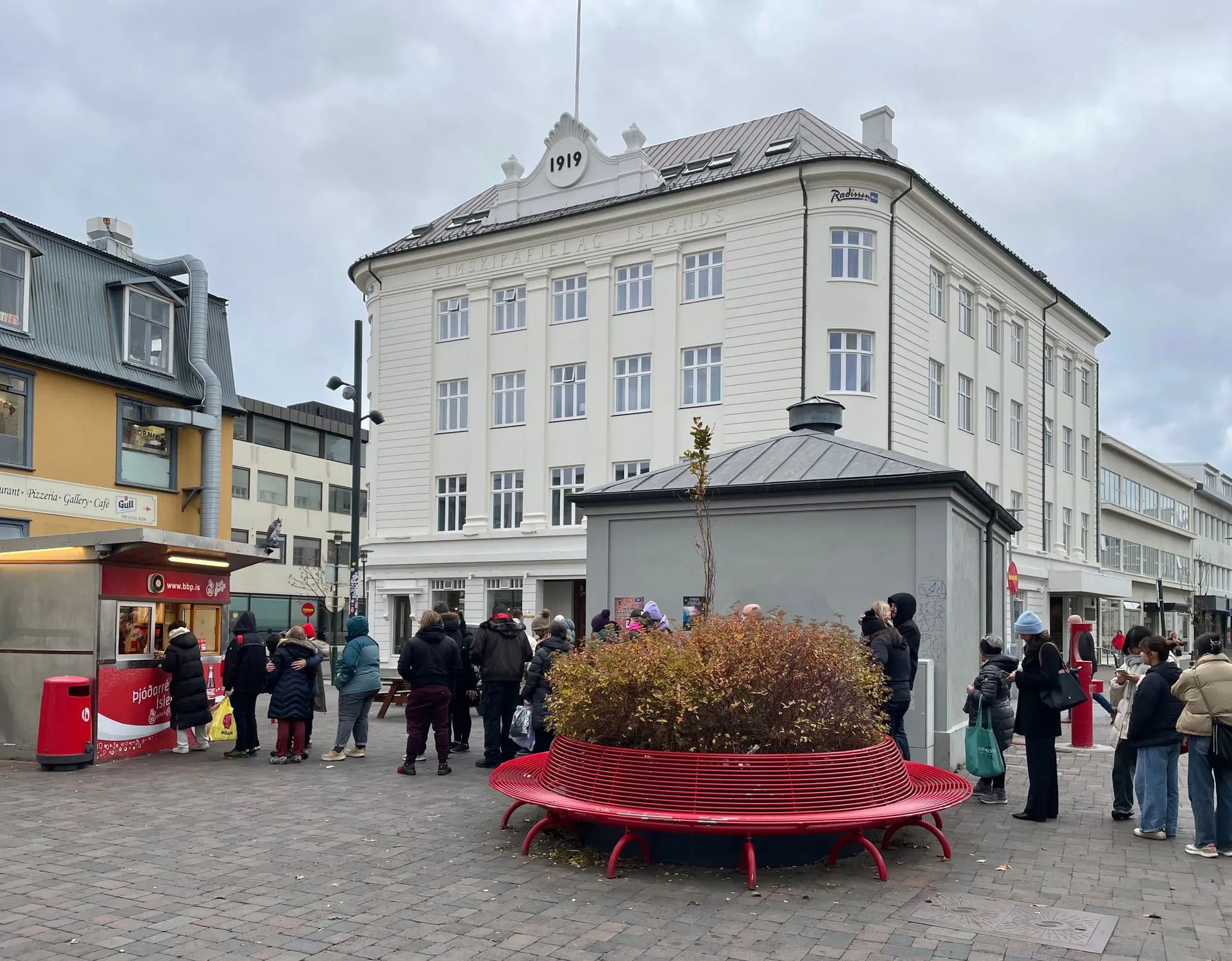
- The hot-dog stand. A pylsa — the famous lamb-pork hot dog — from a stand like Bæjarins Beztu in Reykjavík is the cheapest hot meal in the country and a genuine institution. Order it eina með öllu (“one with everything”).
- Soup. Many cafés serve a bowl of soup with free bread refills — filling, warming and cheap.
- Petrol-station grills. Olís, N1 and Orkan stations sell burgers, hot dogs and chips that are cheap, hot and everywhere on the Ring Road.
What to skip on a budget: sit-down restaurant dinners, hotel breakfasts you can replicate from Bónus, alcohol (buy from the duty-free on arrival if you must — the state Vínbúðin shops are pricey and have limited hours), and anything bottled.
Where should you sleep to keep costs down?
Accommodation is the second big lever.
- Campsites are the cheapest beds in Iceland. A pitch costs a small fraction of a hotel room, serviced sites ring the whole Ring Road, and many have kitchens and hot showers. Camping season is roughly mid-May to September; wild camping is restricted, so use marked sites.
- The campervan option is the budget road-tripper’s favourite. It folds your bed and your transport into a single daily cost, lets you cook your own food, and frees you from booking hotels ahead. For two people outside winter it is often the cheapest way to see the country. You still pay campsite fees most nights for facilities.
- Hostels and guesthouses with shared kitchens beat hotels, especially if you cook. Dorm beds are the cheapest indoor option.
- Hotels are the expensive default — fine for a night or two in Reykjavík, costly as a nightly habit.
In winter, when campsites largely close and a campervan gets cold and tricky, budget hostels and guesthouses become the sensible cheap choice.
How do you get around Iceland cheaply?
This is the line item that most depends on your group size.
- Strætó public buses are the cheap backbone. They cover Reykjavík and run intercity routes to many towns; a single city fare is only a few euros. Great for a solo, Reykjavík-based trip. The catch: rural coverage is thin and slow, and the South Coast and Highlands aren’t realistically bus-served.
- Shared day tours from Reykjavík reach the Golden Circle, South Coast and aurora without a car. Cheapest for solo travellers; see Iceland without a car for the full breakdown of what’s reachable and what isn’t.
- A shared rental car still wins for two or more people doing the South Coast or Ring Road. Split between three or four, a small 2WD is cheaper than buying everyone day tours, and it unlocks free picnicking and camping anywhere. A 2WD handles all the paved sights; you only need a pricier 4×4 for Highland F-roads.
Rule of thumb: solo and Reykjavík-based → buses + a couple of day tours; two or more people → split a small rental. Fuel is expensive, so a small economical car beats a big one.
What’s worth paying for, and what has a free alternative?
You don’t have to skip everything paid — just spend where the free version doesn’t exist.
| Paid thing | Typical cost | Free / cheap alternative |
|---|---|---|
| Blue Lagoon / Sky Lagoon | Tens of € entry | A geothermal public pool for a few euros — open year-round, more local |
| Guided ice cave tour | Expensive (€100+) | No real free version — caves need a guide; this is worth paying for if it’s your trip’s reason |
| Glacier hike | Expensive | View the glacier free from the road |
| Whale-watching boat | Mid-range | Walk the Old Harbour and watch seabirds and seals free |
| Coach tour of the South Coast | Per-person | Self-drive the same route in a shared rental |
The one paid experience almost every budget traveller should keep is the public swimming pool — heated geothermal pools and hot-pots in nearly every town, costing only a few euros. It’s the cheapest organised activity in Iceland and the most authentically local thing you can do.
When is Iceland cheapest to visit?
Timing moves your two biggest fixed costs — flights and accommodation — more than almost anything else.
- Summer (June–August) is the most expensive: peak demand, highest hotel and car prices, books out months ahead.
- Shoulder season (May, September, October) drops prices noticeably while the weather is still workable and most sights open. This is the value sweet spot.
- Winter (November–March, excluding the Christmas/New Year peak) has the lowest flights and beds, plus aurora season — at the cost of short daylight and tougher driving.
For budget travellers, the standout months are the shoulders and early winter: see Iceland in September and Iceland in October (mild, aurora returning, off-peak prices), and Iceland in November for the first proper winter prices with aurora still on the table.
What’s a realistic daily budget?
Treat these as typical per-person, per-day ranges excluding flights, and remember Icelandic prices swing with the exchange rate — verify live before you book.
- Shoestring — roughly €70–€110/person/day. Camping or a shared campervan, self-catering from Bónus, tap water, free sights only, the occasional pool and hot dog, costs split across a small group. This is Iceland done lean and it genuinely works.
- Mid-range — roughly €150–€220/person/day. Guesthouses or budget hotels, a mix of self-catering and cheap eats out, a shared rental, and one paid activity every couple of days.
The single biggest variable inside both tiers is how often you eat out and how many guided tours you book. Keep both low, lean on the free nature, and Iceland is far more affordable than its reputation suggests.
See also
- Free things to do in Iceland — every sight that costs nothing, with locations and seasons
- Iceland without a car — buses, day tours and when a rental still wins
- Iceland in September, October and November — the cheapest months, in detail
- South Coast route — the self-drive that replaces a pricey coach tour
- What to do in Iceland today — live conditions and free ideas
Frequently asked questions
Is Iceland really that expensive?
Yes for food, alcohol and tours — a restaurant main is typically €25–€40 and a beer €9–€12. But the nature is free, so your budget is almost entirely about how you eat, sleep and get around, not entry fees. Control those three and Iceland becomes affordable.
What is the single biggest way to save money in Iceland?
Self-catering. Eating every meal in restaurants is what wrecks most budgets. Shop at Bónus or Krónan, make sandwiches and pasta, fill a thermos, and you can cut your daily food spend by more than half versus eating out.
Can I drink the tap water in Iceland?
Yes — Icelandic tap water is among the cleanest in the world and completely free. Never buy bottled water; carry a refillable bottle and fill it anywhere, including most petrol stations and campsite taps. The only catch is a faint sulphur smell from the hot tap, which is harmless.
Is camping cheaper than hotels in Iceland?
Far cheaper. A campsite pitch costs a fraction of a hotel room, and there are serviced campsites all around the Ring Road. A campervan goes further by combining your bed and your transport into one cost — often the cheapest way for two people to do a road trip outside winter.
Should I rent a car or take the bus to save money?
For a solo traveller on a tight budget, the Strætó bus plus day tours from Reykjavík is cheapest. For two or more people, splitting a small rental usually beats both buses and tours for the South Coast and Ring Road, and gives you the freedom to picnic and camp. See our car-free guide for the trade-offs.
What are the cheapest meals in Iceland?
A hot dog (pylsa) from a stand like Bæjarins Beztu, a bowl of soup with free bread refills, a supermarket sandwich or skyr, and hot food from a petrol-station grill (Olís, N1) are the cheapest hot meals. Skip sit-down restaurants and bottled drinks and your food bill stays manageable.
Is the Blue Lagoon worth it on a budget?
Not really. Blue Lagoon entry runs into the tens of euros, while a local geothermal public pool costs only a few euros, is open year-round and feels more authentically Icelandic. On a budget, choose the town pool every time and put the saving toward a tour you actually want.
When is Iceland cheapest to visit?
The shoulder months — May, September and October — and the winter off-season have the lowest flights and accommodation, while summer (June–August) is the dearest. October and November keep aurora season and mild-ish weather at off-peak prices, which is the sweet spot for budget travellers.