The Icelandic hot dog: why a gas-station pylsa is a national institution
The Icelandic hot dog, or pylsa, is a lamb-forward sausage with two onions and three sauces — Iceland's cheapest hot meal. How to order 'eina með öllu'.
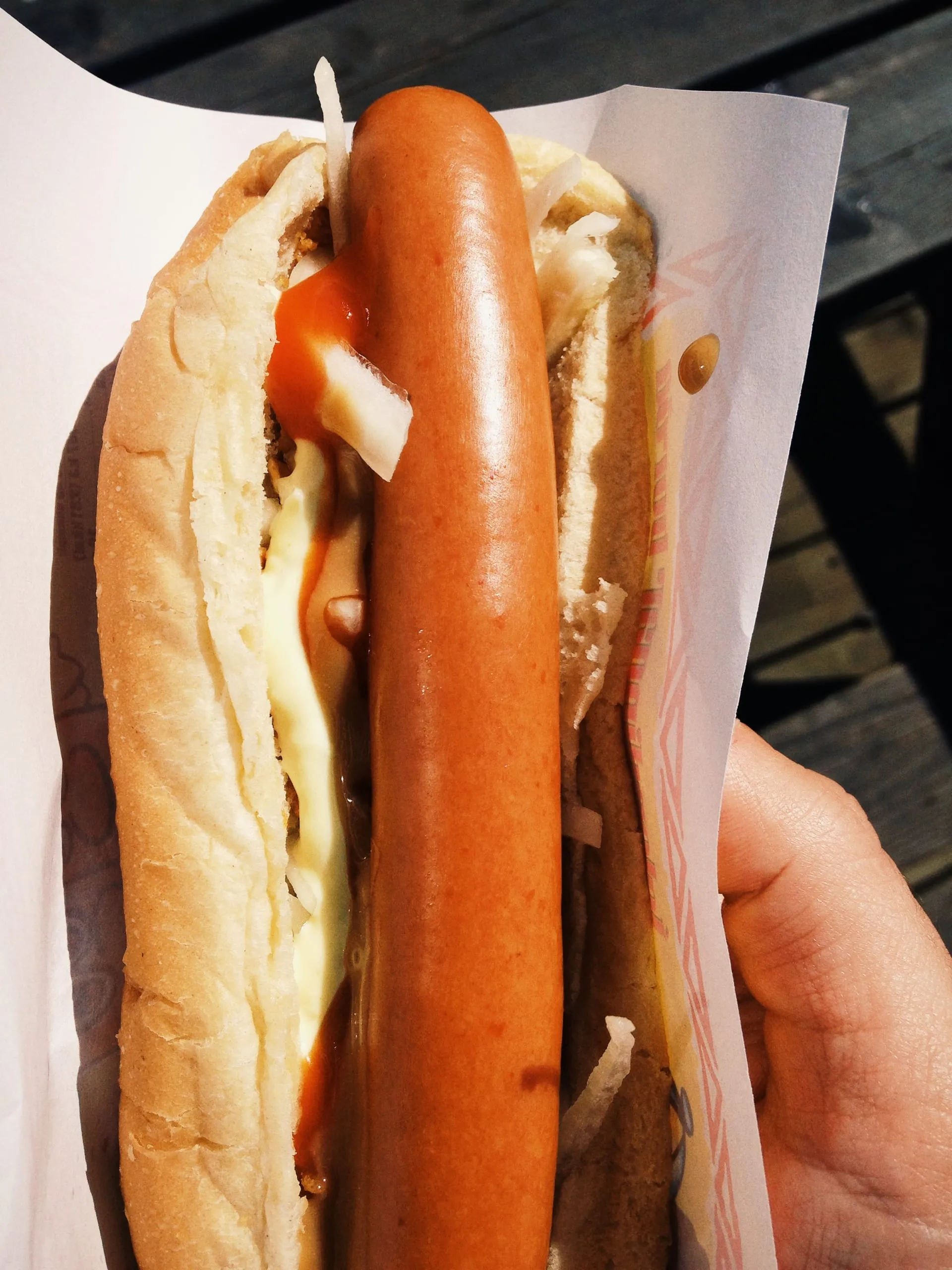
At a glance
- What it is
- Pylsa — an Icelandic hot dog in a steamed bun, the national cheap eat
- The sausage
- Lamb-forward blend of lamb, pork and beef; snappier and smokier than a US frankfurter
- The classic order
- Eina með öllu — one with everything
- The toppings
- Crispy fried onion, raw onion, ketchup, sweet brown mustard (pylsusinnep), remoulade
- Famous stand
- Bæjarins Beztu Pylsur, by Reykjavík's old harbour, running since 1937
- Where else
- Petrol-station grills (N1, Olís, Orkan) island-wide, often around the clock
- Price
- A few hundred krónur — routinely the cheapest hot meal in Iceland
- Location
- Iceland
- Category
- editorial
- Published
- 10 August 2026
- Updated
- 10 August 2026
Source summary
Evergreen explainer based on standard local knowledge, Visit Reykjavík and the vendor Bæjarins Beztu Pylsur. No live event; prices change, so current cost is routed to the venue.
What makes the Icelandic hot dog different?
It’s the lamb. The Icelandic pylsa is a blend of lamb, pork and beef, but the lamb leads — it gives the sausage a slightly smoky, savoury edge and a firmer snap than the all-pork or all-beef franks most visitors know. It’s simmered or grilled and tucked into a soft, steamed bun.
The other half of the magic is the toppings, and there are five of them. Two onions: raw white onion for bite, and crunchy deep-fried onion for sweetness and texture. Then three sauces: ketchup, a sweet brown mustard called pylsusinnep, and remoulade, a mild mayonnaise-based sauce with a little relish in it. Together they’re the whole point.
One local aside: Icelanders will happily argue about whether it’s spelled pylsa or pulsa. Both are used, nobody wins, and it changes nothing about the sausage.
How do you order “eina með öllu”?
Walk up and say “eina með öllu” — roughly AY-na meth OTH-lu. It means “one with everything”, and it’s the order 90% of the queue in front of you just placed. You’ll get all five toppings, layered in the classic way: fried and raw onion in the bottom of the bun, the sausage on top, then ketchup, sweet mustard and remoulade streaked over it.
Want to change it? “Án” means without — so “án hrárs lauks” is without raw onion, a common ask for anyone who finds it sharp. But the honest local advice is to get it með öllu the first time. The combination is the tradition, and it works.
Where do you get one — Bæjarins Beztu, or the nearest petrol station?
The famous one is Bæjarins Beztu Pylsur — “the town’s best hot dogs” — a tiny red stand on Tryggvagata by Reykjavík’s old harbour, going since 1937. The Guardian once called it the best hot dog stand in Europe; Bill Clinton ate one here. There’s almost always a queue, and it’s a fair pilgrimage if you’re already downtown — see it alongside the rest of things to do in Reykjavík. Details and current price are on Visit Reykjavík.
Here’s the thing nobody tells you, though: you don’t need the famous stand. Almost every petrol station in the country — N1, Olís, Orkan — has a grill turning out the identical pylsa, frequently 24 hours a day. On a road trip, the grill at a random forecourt in the middle of nowhere is often the best-value hot meal for 100 km in any direction.
Why is it the budget traveller’s best friend?
Because Iceland is expensive and the pylsa is not. At a few hundred krónur, it’s dependably the cheapest hot meal you’ll find — a fraction of a sit-down restaurant plate, and available at any hour from a filling station. That’s why so many people surviving Iceland on a shoestring quietly live on them.
If you’re watching every króna, the hot dog belongs on the same list as tap water and the swimming pools — see Iceland on a budget. It’s also the most accessible bite in the whole local food scene: no reservation, no fuss, and it actually tastes of Iceland.
A couple of honest tips
- It’s a snack, not a meal. One pylsa is a satisfying stop-gap, not dinner. Hungry travellers order two, and nobody blinks.
- Skip the queue if it’s long. The line at Bæjarins Beztu can run 20–30 people deep in summer. The sausage is genuinely great, but it is the same sausage as the petrol station down the road — if you’re short on time, don’t wait for the postcard.
- Prices change. We won’t quote a number that’ll be wrong next season; check the stand’s board or the vendor’s own site for today’s price.
See also
- Iceland on a budget — where the cheap hot dog fits the wider survival kit
- Local food in Iceland — beyond the pylsa
- Things to do in Reykjavík — including the pilgrimage to Bæjarins Beztu
Frequently asked questions
What is an Icelandic hot dog made of?
An Icelandic hot dog, or pylsa, is a blend of lamb, pork and beef, but it's the lamb that makes it taste different — smokier, with more snap than an American frankfurter. It's boiled or grilled and served in a steamed bun with two kinds of onion and three sauces.
How do you order 'one with everything' in Iceland?
Say 'eina með öllu' (roughly AY-na meth OTH-lu), which means 'one with everything'. You'll get raw and crispy fried onion, ketchup, sweet brown mustard called pylsusinnep, and remoulade. If you want to skip something, 'án' means without — so 'án hrárs lauks' is without raw onion.
Where is the famous Bæjarins Beztu hot dog stand?
Bæjarins Beztu Pylsur is a tiny red stand on Tryggvagata by the old harbour in central Reykjavík, running since 1937 and once named the best hot dog in Europe by The Guardian. There's usually a queue, and it has a few other kiosks around the city too.
Are Icelandic gas-station hot dogs actually good?
Yes, genuinely. Petrol stations like N1, Olís and Orkan grill the exact same pylsa, often around the clock, and locals eat them without a second thought. If the queue at Bæjarins Beztu is long, the nearest station forecourt is just as good and often cheaper.
How much does an Icelandic hot dog cost?
It's only a few hundred krónur — reliably the cheapest hot meal in an otherwise expensive country, which is why budget travellers rely on them. Prices creep up over time, so check the current price at the stand or on the vendor's own site rather than trusting an old figure.