First snow: how driving in Iceland changes in November
November turns Iceland's roads to winter: snow on the passes, storm closures east of Vík, black ice and short days. What changes and how to plan your drive.
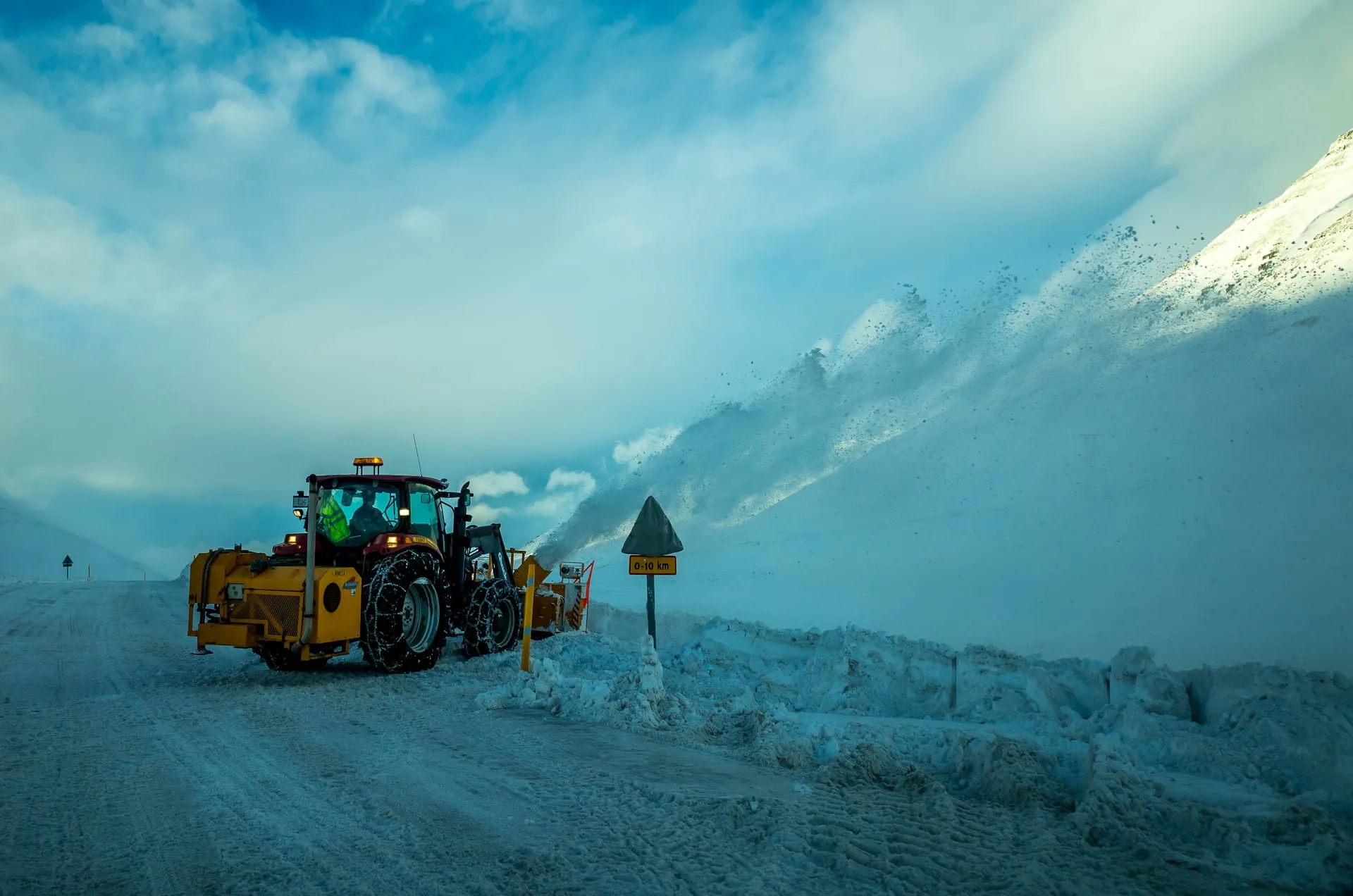
At a glance
- Daylight
- About 8 hours on 1 November, about 5 by the 30th (Reykjavík sunrise ~09:10 at the start, ~10:45 at the end)
- Where snow and ice come first
- Higher roads and passes — Hellisheiði on the way to the South Coast, and the high Ring Road in the north and east
- Where storms close roads first
- The exposed Ring Road east of Vík, starting with the Mýrdalssandur sand plain
- Plowed first
- Route 1 (the Ring Road) and the Golden Circle
- F-roads
- Closed for the season — no Highland driving until summer
- Headlights
- Required by law at all times, day and night, all year
- Tyres
- Rental cars come on winter tyres in winter, often studded; studded tyres are allowed from early November
- Daily check
- Veður.is warnings + the road.is condition map, every morning before you drive
- Plan shape
- Shorter legs, two real stops a day, base nights in Vík or Höfn, at least one buffer day
- Location
- Iceland
- Category
- safety
- Published
- 3 November 2026
- Updated
- 3 November 2026
Source summary
Evergreen seasonal explainer based on standard local driving knowledge, the November daylight and route figures published on whattodo.is, and the official road (road.is / Vegagerðin), weather (Veður.is) and safety (SafeTravel) services. It describes the usual November pattern only — it states no live conditions or specific closures, which you check on the day.
How does driving in Iceland change in November?
November is the month Iceland’s roads switch to winter mode. October can still feel like autumn on the coast; by November the first snow is usually settling on higher ground — though some years the lowlands stay brown into the month — storms close roads more often, and more of your driving happens in twilight.
None of that makes Iceland undrivable. Route 1 and the Golden Circle are plowed first and are normally drivable between storms. What changes is how you plan: buffer days instead of a tight schedule, shorter legs instead of long dashes, and a morning check of the official sites instead of trusting yesterday’s forecast.
This piece describes the usual November pattern. It does not tell you what any road is doing today — that only ever lives on road.is and Veður.is.
What actually changes on the road?
Four things, roughly in the order you’ll notice them:
- Snow on the higher roads first. The coast can be bare and wet while the passes are white. Heading for the South Coast, that’s Hellisheiði, the moorland climb between Reykjavík and Selfoss — when it closes, Þrengsli (Route 39) is the usual alternative. On the Golden Circle it’s the climb over Mosfellsheiði to Þingvellir.
- Wind plus snow means closures. Wind, not cold, is what shuts Icelandic roads. On open ground, blowing snow (skafrenningur) can cut visibility to almost nothing even when no new snow is falling.
- Black ice on calm, clear mornings. After a wet day, a clear night freezes the road into a thin, near-invisible glaze — hálka on the road.is map, or hálkublettir for icy patches. Bridges and shaded dips freeze first. November temperatures hover around freezing, the slipperiest range of all: ice with a film of water on top.
- Less light, more dark driving. Daylight falls from about 8 hours on 1 November to about 5 by the 30th. In Reykjavík the sun rises around 09:10 at the start of the month and not until about 10:45 at the end, and by late November it sets before 16:00.
Headlights are already the law here: driving lights on at all times, day and night, all year. In November’s half-light, use proper dipped headlights rather than daytime running lights, which on many cars leave the rear lights off. The car behind you in spray or blowing snow needs to see your tail lights.
Do you need winter or studded tyres in November?
You don’t need to arrange anything yourself. In winter, Icelandic rental cars come on winter tyres — often studded — and studded tyres are allowed from early November. If you pick up a car in the first days of the month, ask the desk what it’s on.
Be clear about what studs do: they bite into ice and shorten your stopping distance. They don’t make ice behave like dry tarmac. Slow down anyway, especially on bridges and shaded stretches.
A 4x4 isn’t required for Route 1 or the Golden Circle. It helps you pull away in fresh snow and in snowy car parks; it does nothing for braking on ice. Know what your rental cover excludes, too — a door caught and bent by a winter gust is a classic claim and rarely covered, which is why rental-car insurance in Iceland is worth reading before you pick up the keys.
What should you check every morning before you drive?
Two sites, every morning before the keys go in — and again the evening before:
- Veður.is — warnings first, then wind. The Icelandic Met Office issues colour-coded yellow, orange and red warnings. Read the wind forecast for your whole route, not just your start point.
- road.is (umferdin.is) — the road condition map. It colours each stretch by its state, from easily passable through icy patches, slippery and heavy going to impassable and closed, with webcams on the main routes. Check the whole leg.
Then the rules we drive by:
- Never drive into a red warning. Orange on your route means rethink that leg.
- Never pass a closed road. Lokað means closed and ófært means impassable — the words you’ll meet are decoded in Icelandic road signs explained.
- Re-check before you leave a town for an exposed stretch. A morning check is a snapshot, not a promise.
SafeTravel posts active travel alerts and lets you leave a travel plan before a long winter drive. The full walk-through of all three sites is in how to check road conditions in Iceland.
Which roads stay open in November — and which close?
- Route 1 and the Golden Circle are plowed first. They’re the priority network, so the South Coast to Vík and the Golden Circle loop are normally drivable between storms.
- The F-roads are gone for the season. Every Highland F-road is closed through winter — see when Iceland’s F-roads close for winter. Don’t plan around any of them until summer.
- East of Vík is the exposed stretch. Vík to Höfn is paved and plowed, but it crosses open sand plains with nothing to break the wind: Mýrdalssandur, just east of Vík, is typically the first place a storm closes, and Skeiðarársandur near Skaftafell takes hard crosswinds.
- The full Ring Road crosses higher ground. In the north and east, Route 1 climbs over Holtavörðuheiði, Öxnadalsheiði and Möðrudalsöræfi, where snow settles sooner and closures come more often than on the South Coast.
How should you plan a November road trip?
Plan for the light you have and the storm you might get:
- Shorter legs, two real stops a day. With 5–8 hours of daylight, two proper stops — a waterfall walk, a black-sand beach, a glacier lagoon — plus the driving is a full day. A third is a bonus, not the plan.
- Base nights instead of dashes. Sleep in Vík (187 km from Reykjavík, about 2.5 hours’ driving) for the South Coast, and in Höfn or near Jökulsárlón for the glacier lagoon and ice caves. A Reykjavík–Jökulsárlón day trip is 740 km and about 10 hours of pure driving — double late-November daylight before you stop for anything.
- Drive in daylight. Set off when it gets light and aim to arrive by dark; black ice and blowing snow are hardest to read at night.
- At least one buffer day. Keep one free day per four days of driving so a closed road costs you a slow day — rainy-day ideas cover it — not the trip. Book refundable rooms where you can.
- Fill up whenever you can east of Vík. Stations are sparse, and a full tank keeps the heater running if you’re held up.
For a ready-made plan built on this shape, see the 5-day winter itinerary; Iceland in November covers what else the month brings.
The bottom line
November driving in Iceland is about rhythm, not courage. Check Veður.is and road.is every morning, keep your headlights on and your legs short, and let a storm cost you a day rather than force a drive. Do that, and quiet roads and low winter light are a fair trade for the weather.
See also
- When Iceland’s F-roads close for winter — the autumn closing sequence
- How to check road conditions in Iceland — road.is, Veður.is and SafeTravel, step by step
- Icelandic road signs explained — lokað, ófært, hálka and the rest
- Rental-car insurance in Iceland — what wind and gravel damage can cost you
- Iceland in November and Iceland in December
- Iceland in winter — the full-season overview
Frequently asked questions
Is it safe to drive in Iceland in November?
Yes, on the main roads, if you drive to the conditions. Route 1 and the Golden Circle are plowed first and are normally drivable between storms. The risks are wind, black ice and short days — so check Veður.is and road.is every morning, drive in daylight, slow down on bridges and in shaded dips, and never drive into a red warning or past a closed road. If winter driving isn't for you, guided day tours from Reykjavík run the South Coast through the winter, weather permitting.
Do you need studded tyres to drive in Iceland in November?
You don't need to arrange them yourself. In winter, Icelandic rental cars come on winter tyres — often studded — and studded tyres are allowed from early November. If you pick a car up in the first days of the month, ask the desk what it's on. Studs shorten your stopping distance on ice; they don't make ice safe, so slow down regardless.
Do you need a 4x4 in Iceland in November?
Not for Route 1 or the Golden Circle — both are paved and plowed first, and a 2WD on winter tyres handles them in normal conditions. A 4x4 helps you pull away in fresh snow, on snowy side roads and in car parks, but it does nothing for braking on ice. The F-roads that genuinely need one are closed for the season anyway.
Can you drive the whole Ring Road in November?
You can, but it's the exposed option. Beyond the South Coast, Route 1 crosses higher, snowier ground in the north and east — Holtavörðuheiði, Öxnadalsheiði and Möðrudalsöræfi — where closures come more often. Allow 10 days or more with at least two buffer days. For a first winter trip, the South Coast out to Vík and Höfn and back is the far more reliable plan.
Do you need your headlights on during the day in Iceland?
Yes. Icelandic law requires driving lights on at all times, day and night, all year round. In November's half-light, switch to proper dipped headlights rather than relying on daytime running lights, which on many cars leave the rear lights off — and a driver behind you in spray or blowing snow needs to see your tail lights.
What should you do if a storm closes the road ahead?
Turn back to the last town and wait it out — don't sit on an exposed stretch hoping it reopens, and never drive past a closed gate. Storm closures often last hours rather than days, and road.is shows when the road reopens. If you're caught in poor visibility, slow right down and put the hazards on; if you're stuck, stay with the car and call 112.