Guide
Planning an Iceland honeymoon
Plan a romantic Iceland honeymoon — private hot-spring soaks, scenic dining, aurora vs midnight-sun timing, where to stay for two, and a relaxed itinerary.
Key facts
- Why it's romantic
- Dramatic low-crowd scenery, geothermal soaks for two, plus aurora or midnight sun
- Two season choices
- Aurora season (~Sept–March) vs the midnight sun (late May–July) — they barely overlap
- Hot springs for couples
- Polished spa lagoons (Sky, Blue, Hvammsvík) or quieter natural / town pools
- Scenic dining
- Harbour seafood, farm-to-table and view dinners — small, popular places; book ahead
- Romantic stays
- Countryside boutique hotels and glass / bubble aurora cabins — verify availability
- How long
- 5–8 nights, basing in 2–3 spots rather than moving every day
- One honest caveat
- Prices, menus and availability change constantly — confirm directly before you book
Is Iceland good for a honeymoon, and what makes it romantic?
Iceland is one of the most romantic trips in Europe — as long as your idea of romance leans toward dramatic nature rather than nightlife. The things the country is famous for happen to be the things that make a honeymoon feel special.
- Dramatic, uncrowded scenery. Waterfalls, black beaches, glacier lagoons and lava fields, and — if you pick your spots and your hour — often barely another soul in sight. The crowds cluster at a handful of midday stops; step slightly off that rhythm and you get the landscape to yourselves.
- Geothermal soaks made for two. The whole island runs on geothermal heat, so warm water to share is everywhere, from polished spa lagoons to a free river you hike into.
- A built-in headline act, either season. Come in winter for the northern lights, or in summer for the midnight sun and its near-endless golden evenings. Most honeymoons elsewhere don’t come with their own sky show.
The one thing to get right is pace. Iceland tempts you to chase a checklist; a honeymoon is the trip to deliberately not do that. Pick a region, go slow, and leave time to simply be somewhere beautiful together.
A note on planning: prices, opening hours, menus and availability in Iceland move constantly with the season and demand. Treat everything here as the kind of thing to look for, and confirm the live details — and book the special bits ahead.
What are the most romantic places and experiences?
The romantic moments here are the quiet ones, not the adrenaline ones. Build the trip around a few of these and let each one breathe:
- A private or off-peak soak. A geothermal lagoon at opening time, late evening, or in a quieter natural pool beats the midday crush. More on the options below.
- A near-empty black-sand beach at the edge of the day. Reynisfjara near Vík, with its basalt columns and sea stacks, is unforgettable in soft light — but treat it with real respect: the sneaker waves here are dangerous, so keep well back from the surf and check SafeTravel first.
- The northern lights from a dark, quiet spot. You don’t need a tour — on a clear winter night, drive a few minutes from town lights to a dark lay-by and look up. See our northern lights page for the when and how, and never treat a sighting as guaranteed.
- A glacier lagoon at first light. Jökulsárlón, where icebergs drift toward the sea, is mirror-calm and almost empty early in the morning; the black-sand Diamond Beach sits just across the road. It’s a long drive east, so it belongs in a trip that bases a night nearby.
- A waterfall you can stand behind. Seljalandsfoss on the South Coast lets you walk behind the curtain of water — glowing at sunset on a still evening.
Pair roughly one of these a day with downtime. The over-scheduled version of Iceland is the enemy of a honeymoon.
Which hot springs and lagoons are best for couples?
Geothermal bathing is the most reliably romantic thing you can do here, and it comes in two flavours. Our full hot springs guide covers them all; for a honeymoon, choose by the mood you want.
The polished spa lagoons — an easy date-night soak with showers, a bar and a view:
- Sky Lagoon (just outside Reykjavík) has an oceanfront infinity edge and a multi-step “ritual,” which makes it a memorable couples’ evening.
- The Blue Lagoon is the famous one — striking milky-blue water, premium price; reserve ahead.
- Hvammsvík, on a fjord northeast of the city, is the quieter, more natural-feeling of the upscale options.
All of these need booking ahead, especially in winter, and prices sit at the premium end — check the current rate and availability directly.
The quieter, more local options — better if you’d rather skip the crowds:
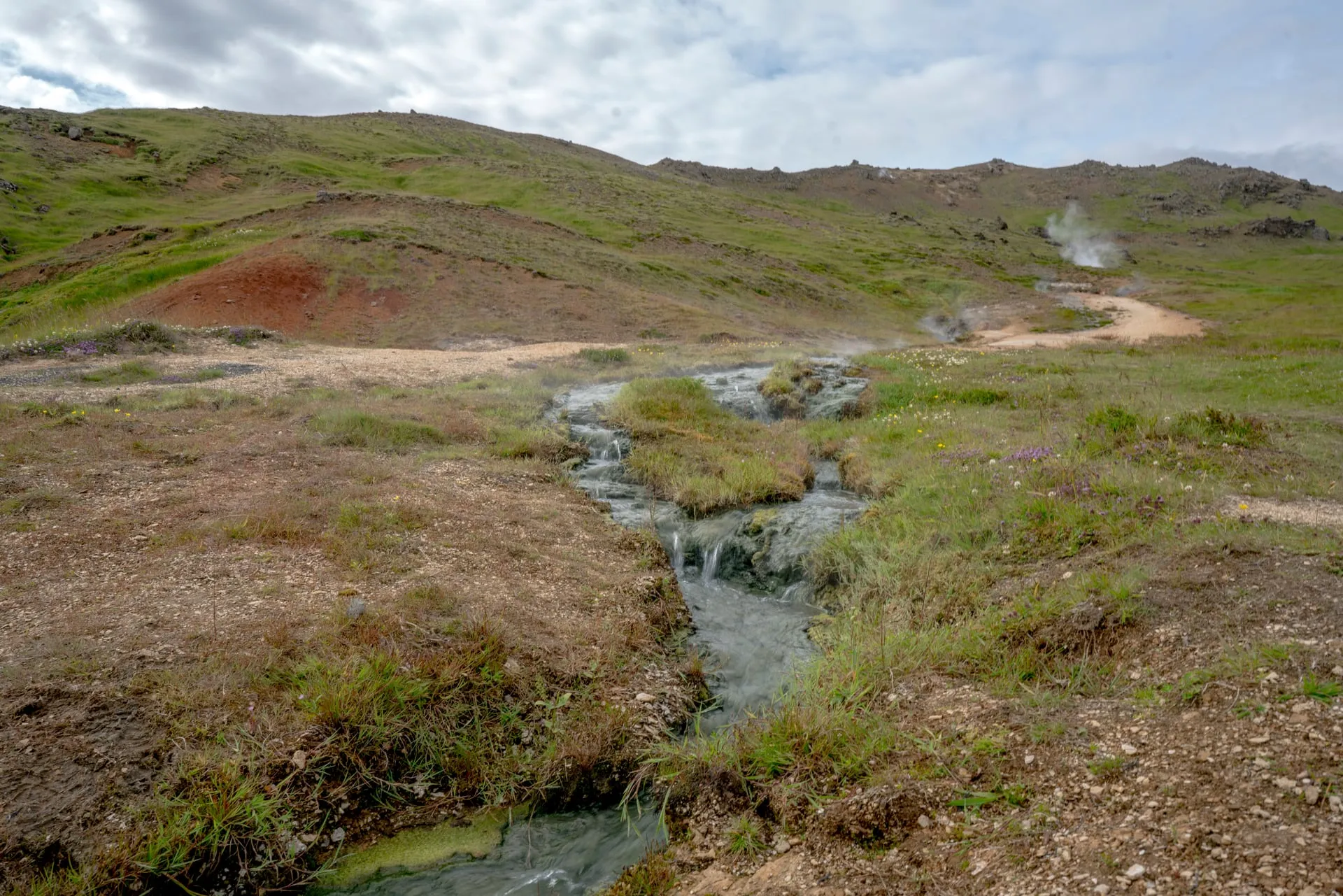
- Reykjadalur, the “steam valley,” is a warm river you reach on a roughly hour-long uphill hike from Hveragerði — you soak in the river itself. Free, scenic and wonderfully low-key when it’s not busy.
- The Secret Lagoon (Gamla Laugin) near the Golden Circle is small, natural-feeling and relaxed.
- A town pool (sundlaug). Almost every town has one with hot-pots, costing only a few euros. It’s cheap, open year-round and the most authentically Icelandic soak there is.
One etiquette point that catches visitors out: at every pool and lagoon you shower without a swimsuit before entering. It isn’t optional and isn’t a tourist rule — locals do exactly the same, and signs explain it in English.
What about scenic dining — the romantic dinner?
Iceland does memorable dinners, but the romance is in the setting and the produce, not a long fancy menu — and the country is small enough that the best tables are often tiny. Rather than chase a specific restaurant that may have changed hands or hours by the time you arrive, look for a type of place:
- Harbour seafood. In a fishing town like Höfn in the Southeast — famous for langoustine — a dinner of just-landed seafood by the water is hard to beat. Reykjavík’s Old Harbour has the same idea.
- Farm-to-table in the countryside. Small rural restaurants built around their own lamb, dairy, vegetables grown in geothermal greenhouses, or fish from down the road. Some of the most charming meals in Iceland are at a single farm.
- A view dinner. A table looking out over a fjord, a glacier or the coast turns an ordinary meal into the evening you remember.
Two honest pointers. First, book ahead — good rural and small-town restaurants have few tables and fill fast in season, and some keep short or seasonal hours. Second, dining out in Iceland is expensive; build a couple of special dinners into the budget rather than eating out every night. We don’t list specific current prices or menus here because they change constantly — confirm directly when you reserve. For the wider picture of what to eat, see our local food guide.
Where should you stay for a romantic trip?
For two people, the romantic end of Icelandic lodging is mostly two kinds of place:
- Glass-roofed and bubble cabins. Transparent-roofed cabins designed so you can lie in bed and watch the aurora (or the midnight-sun sky) overhead. They’re a winter-honeymoon favourite, usually out in the countryside under dark skies.
- Countryside boutique hotels and guesthouses. Small, design-led stays away from the crowds, often with their own restaurant and a hot-tub — a quiet base on the South Coast or in the Southeast.
Both tend to be small and book out early, and their rates swing a lot with season and demand. We don’t quote specific prices or claim a particular property is operating — reserve well ahead and confirm the current rate and availability directly with the place before you commit. A simple romantic shape is one or two nights near Reykjavík for the lagoons and city dinners, then a country stay or aurora cabin for the nature.
When is the best time for a honeymoon — aurora or midnight sun?
This is the big decision, because the two signature experiences barely overlap. Choose your season around the sky you want.
- Aurora season (~September–March). Long, dark nights mean the northern lights are on the table, and the cosy, candlelit, hot-tub-under-the-stars mood is at its strongest. The trade-off is short daylight and tougher driving. The shoulder month of March (and late February) is a sweet spot: you keep proper aurora nights but the days have lengthened enough to actually explore. See Iceland in February and Iceland in March, and the full picture in Iceland in winter.
- Midnight sun (late May–July). Around the June solstice the sun barely sets, giving you near-24-hour golden light, green landscapes, open Highland roads and long romantic evenings — but no aurora, because it never gets dark. Iceland in summer covers it.
- The shoulder compromise — September. Early autumn brings the first dark-enough nights for aurora back alongside a still-workable day length and smaller crowds — a strong, milder-weather honeymoon window. See Iceland in September.
If forced to pick one all-rounder for a honeymoon, late February into March is hard to beat: aurora nights, lengthening days, and the cosy season still in full swing.
How many days, and what’s a romantic itinerary shape?
Aim for 5–8 nights, and resist the urge to lap the whole country. The honeymoon-killer is moving hotels every single day; the fix is to base yourselves in two or three places and take day trips from each.
A relaxed shape that works:
- 2 nights near Reykjavík — settle in, do a spa lagoon as a date night, a city dinner, and the Golden Circle loop at your own pace.
- 2–3 nights on the South Coast — waterfalls you can walk behind, black beaches, a country stay or aurora cabin, soaking at Reykjadalur. The South Coast route strings the icons together.
- 1–2 nights in the Southeast (optional) — push east to the Jökulsárlón glacier lagoon and a harbour-seafood dinner in Höfn, if you have the days.
For a ready-made romantic winter framework with the aurora built in, our 5-day winter itinerary is a good starting point to adapt. The guiding principle for the whole trip: fewer places, more time in each, and one memorable experience a day rather than five rushed ones.
See also
- Hot springs and geothermal pools — every soak, from spa lagoons to free natural pots
- Northern lights — when, where and how to catch the aurora together
- Local food — what to eat and the kinds of places to book
- Iceland in winter and Iceland in summer — the two honeymoon seasons
- Iceland in February, March and September — the romantic months in detail
- South Coast route and Golden Circle — the drives that string it together
- 5-day winter itinerary — a romantic, aurora-friendly framework to adapt
- What to do in Iceland today — live conditions before you set out
Frequently asked questions
Is Iceland a good honeymoon destination?
Yes — it's one of the more romantic trips in Europe if you like nature over nightlife. The scenery is dramatic and, in the right spots, genuinely uncrowded; geothermal lagoons are made for soaking together; and there's a built-in highlight in either season — the northern lights in winter or the midnight sun in summer. The key is to plan it slowly rather than racing a checklist of sights.
When is the best time for an Iceland honeymoon?
It depends on the moment you want. For the northern lights and cosy long evenings, come in aurora season, roughly September to March (late February–March pairs aurora with longer days). For endless light, hiking and golden midnights, come for the midnight sun from late May to July. The two barely overlap, so choose your season around aurora versus midnight sun and build the trip from there.
What are the most romantic things to do in Iceland?
The quiet ones, not the flashy ones. A soak in a geothermal lagoon (book a private or off-peak slot for fewer people), the northern lights watched from a dark lay-by away from town, a near-empty black-sand beach at the edge of the day, icebergs drifting in a glacier lagoon at first light, and a slow view dinner. Pair one experience a day with time to actually be together rather than over-scheduling.
Where should we stay in Iceland for a romantic trip?
For two, the romantic options are usually countryside boutique hotels and the glass-roofed or bubble cabins built for watching the aurora from bed in winter. Both put you away from crowds and close to the landscape. These places tend to be small and book out early, and prices swing with season and demand, so reserve well ahead and confirm the current rate and availability directly with the property.
Are the hot springs and lagoons good for couples?
Very. They split into two kinds: polished spa lagoons like Sky Lagoon, the Blue Lagoon and Hvammsvík, which are an easy date-night soak (reserve ahead, especially in winter); and quieter options like the hike-in hot river at Reykjadalur, the Secret Lagoon, or a local town pool (sundlaug) that's cheap and authentically Icelandic. Note that everyone showers without a swimsuit before entering — it's standard here, with signs in English.
How many days do you need for an Iceland honeymoon?
Five to eight nights is the sweet spot. That's enough to base yourselves in two or three places — a night or two near Reykjavík, a couple on the South Coast, maybe one in the Southeast by the glacier lagoon — without the daily-dash feeling that ruins a honeymoon. Fewer than five nights pushes you to rush; more lets you slow right down. Pick a region and go deep rather than trying to lap the whole country.
Do you need a car for a honeymoon in Iceland?
Effectively yes, if you want the romantic, off-the-clock version. A rental lets you reach a quiet beach at sunset, a remote cabin, or a country restaurant on your own schedule, none of which fit a day-tour timetable. A 2WD covers the paved South Coast and Golden Circle icons; you'd only need a 4×4 for Highland F-roads in summer. Always check road and weather conditions on SafeTravel and Veður.is before you set out.